
Why skipping the gym membership does not mean skipping fitness
Gym memberships carry real costs. For a household with two adults, annual fees can reach several hundred dollars before adding any extras like childcare, classes, or parking. For families managing tight budgets, that recurring expense is hard to justify, especially when the evidence for gym-specific benefits over general physical activity is thin for the general population.
The federal physical activity guidelines for Americans do not require gym access. They call for consistent moderate-to-vigorous movement, and that movement can happen on a sidewalk, in a living room, or on a public trail as effectively as it does on a treadmill. The six approaches below cover the most practical and well-supported ways to stay active at little to no cost, drawing on publicly available resources most families already have access to.
A note on starting safely
This article provides general health information, not medical advice. If you or a family member has a chronic condition, injury history, or has been inactive for an extended period, consult a qualified healthcare professional before starting a new exercise routine. A physician or physical therapist can help tailor activity recommendations to individual health needs.
For families also thinking about overall wellness habits, our article on building a family wellness routine from scratch covers how movement fits alongside nutrition, sleep, and preventive care in a workable household plan.
Use public parks and trails as your primary gym
Municipal parks are maintained with public tax dollars and designed for active use. Running paths, open fields, pull-up bars, and outdoor fitness stations appear in parks across most U.S. cities and towns, often at no cost. The U.S. Department of Health and Human Services physical activity guidelines recommend at least 150 minutes of moderate aerobic activity per week for adults, and a brisk walk or jog through a local park covers that goal without any equipment purchase.
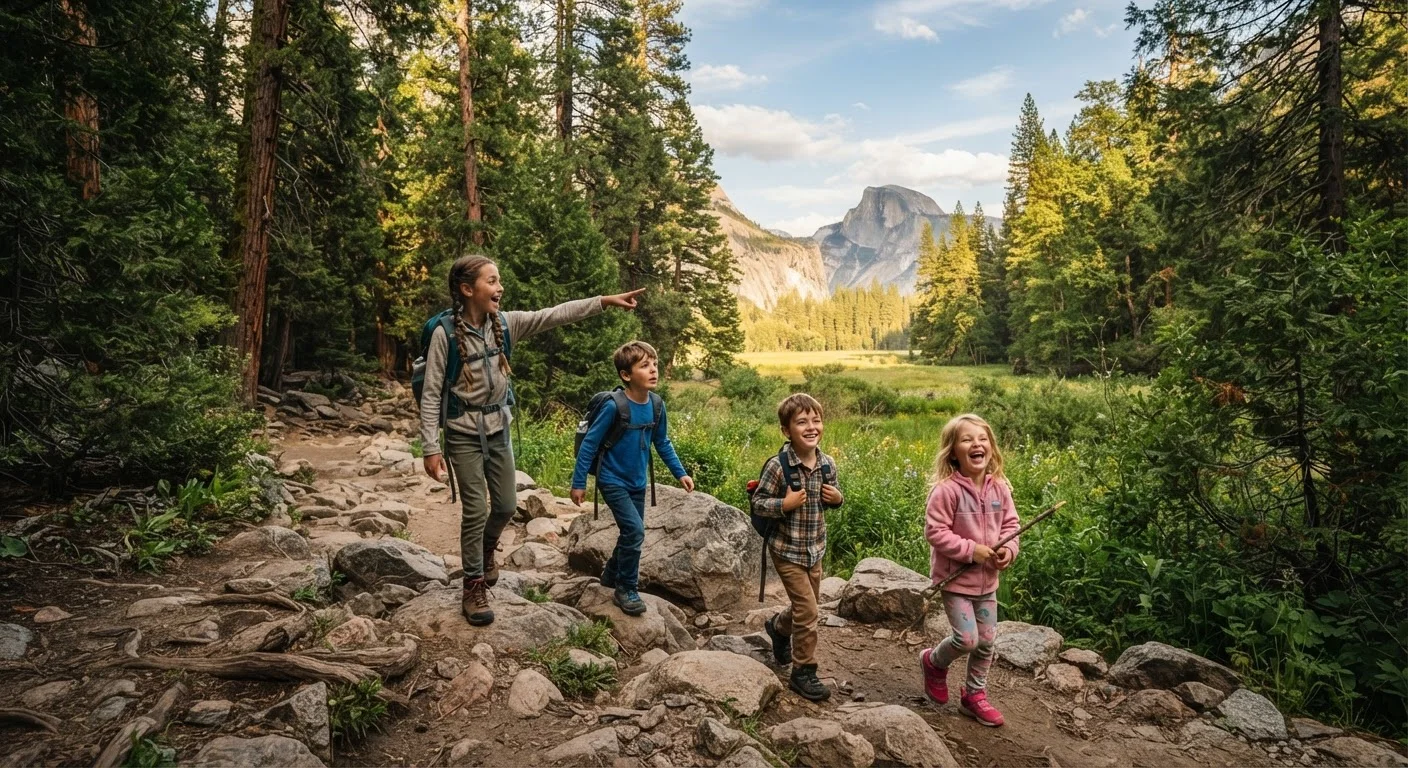
Families with children can combine playtime with cardiovascular exercise. Pushing a stroller, playing tag, or cycling alongside kids on a path all count as moderate activity for adults. Trails maintained by state and local agencies extend these options into natural settings. The National Park Service also offers free admission days throughout the year, making longer hikes accessible on a tight budget.
A brisk walk through a local park covers the weekly aerobic activity goal adults need.
Build a consistent bodyweight routine at home
No equipment is required to build functional strength. Push-ups, squats, lunges, planks, and glute bridges work the major muscle groups and can be progressed by adjusting tempo, range of motion, or rep count rather than adding weight. The American College of Sports Medicine notes that resistance training two or more days per week supports muscle health across all age groups.
A consistent 20-to-30-minute home routine done several times a week produces measurable fitness changes over months. Free resources from public universities and government health agencies, such as the National Institutes of Health's MedlinePlus, provide written and video guidance on safe exercise form without any subscription cost. Starting simple and building gradually reduces injury risk and keeps the habit sustainable for the whole household.
Push-ups, squats, and planks work every major muscle group with zero equipment costs.
Tap into library and community fitness programs
Public libraries have expanded well beyond books. Many U.S. library systems provide free access to fitness and wellness apps, streaming workout platforms, and in-branch fitness classes through partnerships with local health organizations. Some systems also lend fitness equipment such as resistance bands, yoga mats, and pedometers through tool-lending programs.
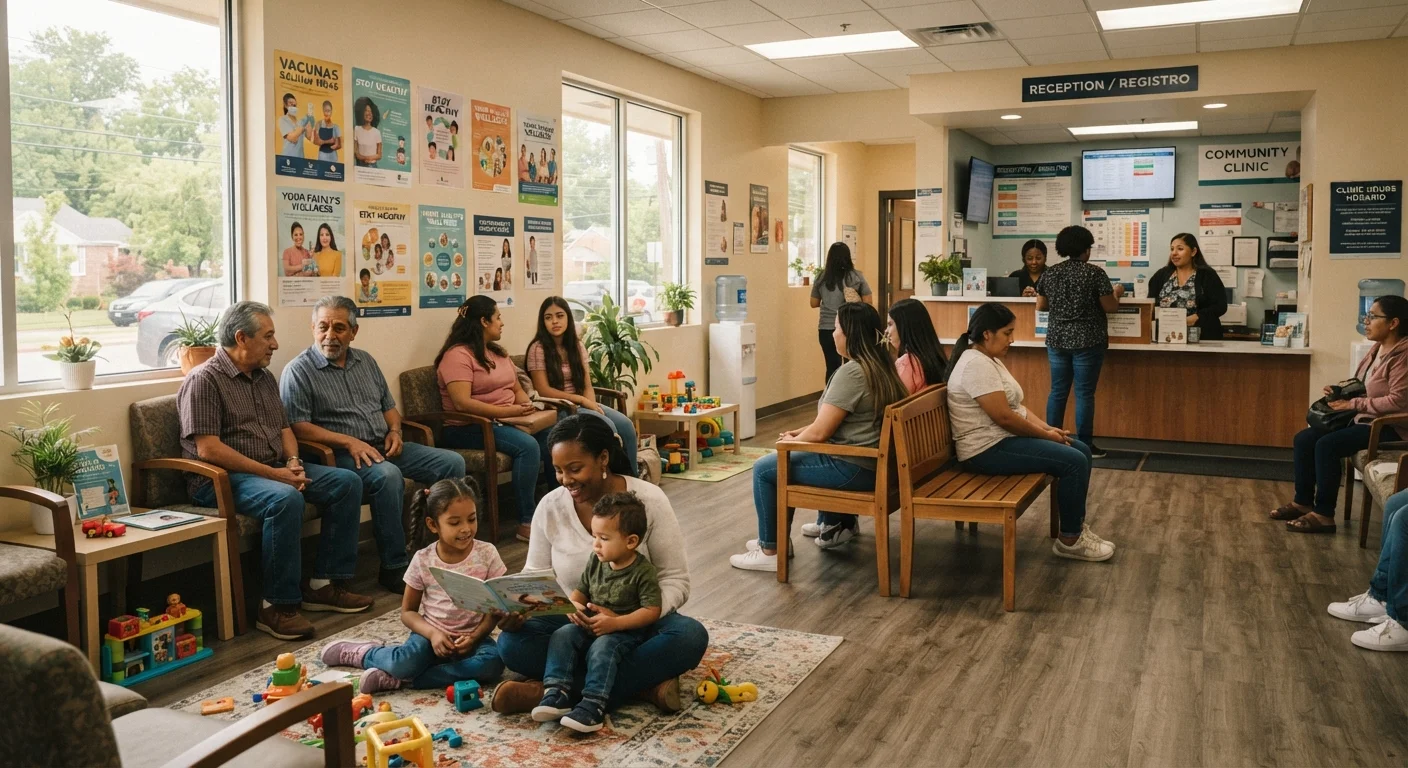
Parks and recreation departments in most municipalities run low-cost group fitness classes, youth sports leagues, and swim programs. Income-based fee waivers are common at publicly funded recreation centers, so it is worth asking directly about sliding-scale pricing. See our guide to community health resources for a broader look at these often-overlooked options.
Many library systems provide free access to streaming workout platforms and fitness apps.
Walk and cycle as transportation, not just exercise
Replacing short car trips with walking or cycling produces physical activity that requires no dedicated workout time. The Centers for Disease Control and Prevention counts active transportation, walking to a bus stop, cycling to a store, as valid moderate-intensity physical activity. A 15-minute walk each way to a nearby errand adds 30 minutes of movement to a day without any schedule adjustment.
Many U.S. cities have expanded protected bike lanes and shared-path networks in recent years. A used bicycle purchased once carries very low ongoing costs compared to monthly gym fees. Families who build active commuting into school drop-offs or weekend errands accumulate substantial weekly movement across every household member.
Walking to nearby errands adds 30 minutes of daily movement without any schedule change.
Follow free online workout resources from credible sources
Several government and academic institutions publish free, peer-reviewed exercise guidance online. The CDC's Move Your Way campaign offers printable activity planners and video demonstrations. The National Institute on Aging publishes a free exercise guide specifically for older adults, covering strength, balance, flexibility, and endurance work with clear instructions and safety notes.
YouTube channels run by certified personal trainers and physical therapists provide structured workout videos at no cost. The quality varies, so prioritizing channels affiliated with recognized fitness or health organizations is worth the extra step of vetting. Families using these resources alongside active outdoor time can cover all physical activity categories recommended in federal guidelines without spending anything on memberships or equipment.
The CDC and National Institute on Aging publish free, structured exercise guidance anyone can follow.
Make movement a shared family habit
Children who grow up in households where physical activity is a regular part of daily life are more likely to maintain those habits as adults, according to research published in public health literature. Weekend hikes, evening walks after dinner, or backyard games after school require no financial commitment beyond existing footwear and outdoor space.
Framing activity as family time rather than exercise removes the psychological barrier of obligation. Seasonal variety also helps: swimming at a public pool in summer, raking leaves in fall, sledding in winter. Connecting movement to exploration, like taking the free activities available at national parks, builds positive associations with activity for children at any age.
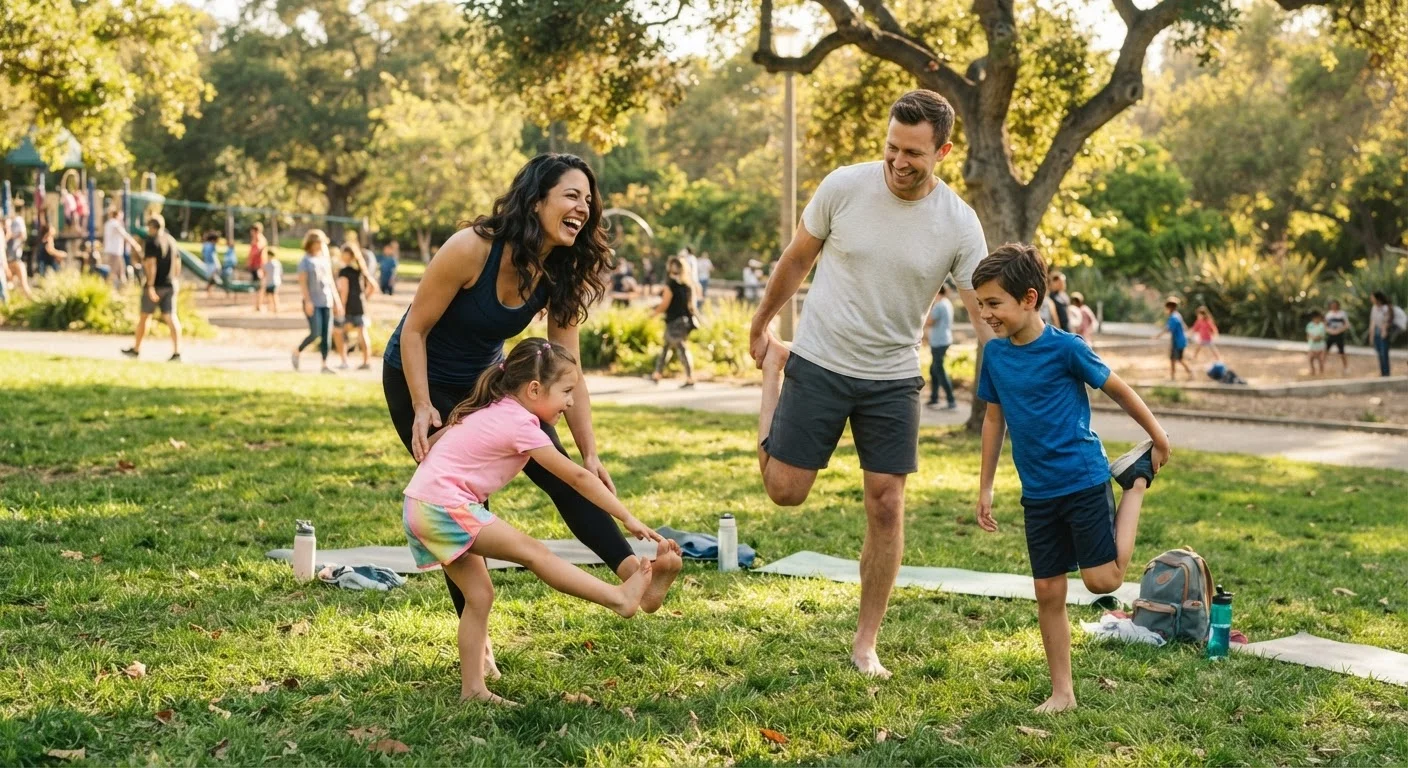
Framing outdoor time as family time rather than exercise lowers the barrier for everyone.
Putting it together without overcomplicating it
No single approach here requires a major lifestyle overhaul. A family that walks to nearby errands three times a week, does a short bodyweight session twice a week, and spends one weekend afternoon at a local park has already met the federal activity guidelines for most household members. That combination costs nothing beyond existing clothing and footwear.
The community health resources most families overlook can extend these options further, particularly for households near public recreation centers or library systems with fitness lending programs. Consistency matters far more than intensity when building long-term physical activity habits, and low-cost routines are easier to sustain than expensive ones when budgets tighten.
This article is for general informational purposes only and does not constitute medical advice. Consult a qualified healthcare professional before starting any new exercise program, particularly if you have a health condition or injury history.