
What national parks actually cost families
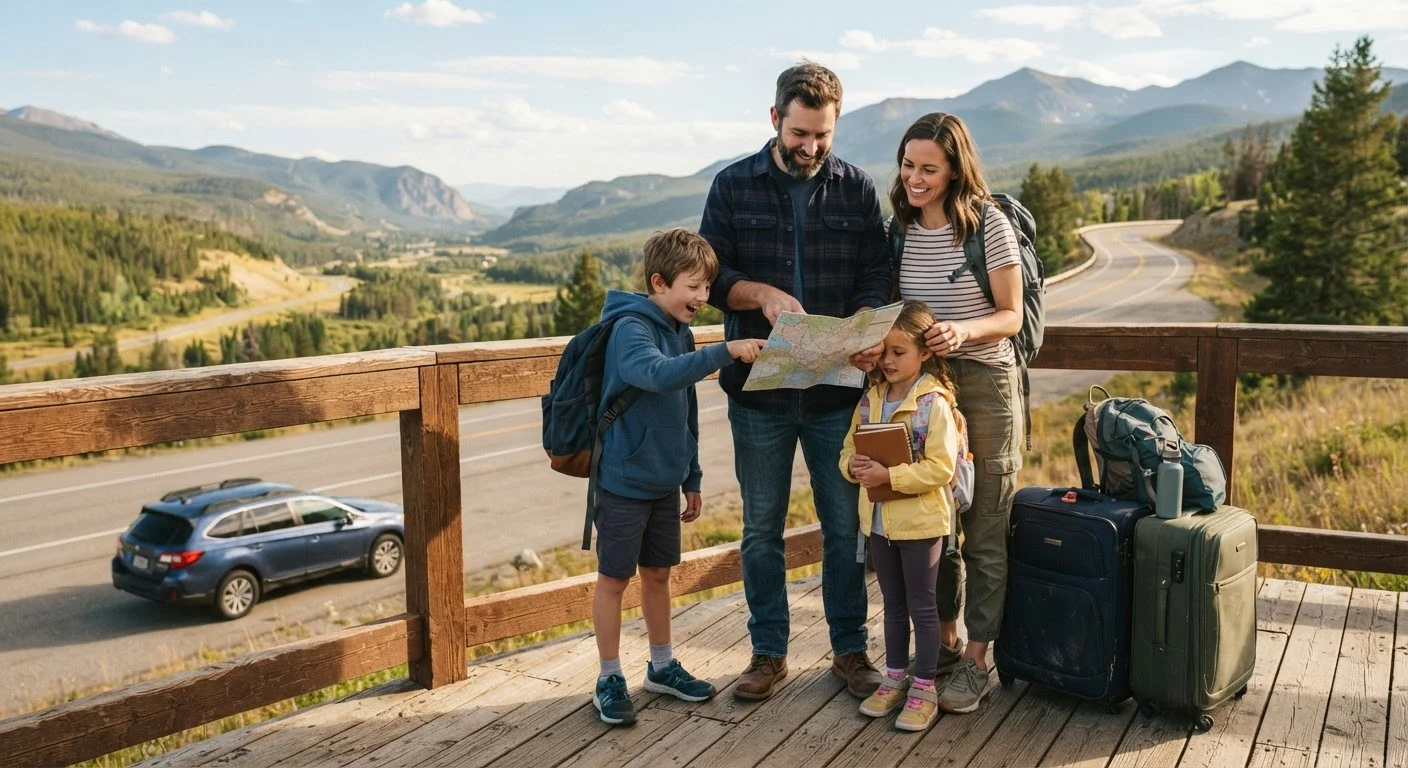
Entry fees at US national parks range from nothing to around $35 per vehicle, depending on the park. That single fee covers everyone in the car for up to seven days, which puts the per-person cost far below most theme parks or museums. Dozens of parks, including many in Alaska and the rural West, charge no entry fee at all. The National Park Service also runs a handful of fee-free days each year when all parks waive admission entirely.
Once you are inside, the majority of activities cost nothing. Trails are free to walk. Visitor centers are free to enter. Ranger programs, which run daily at most major parks from spring through fall, are free to attend. Understanding this structure changes how families budget: the goal is to minimize the one-time entry cost, then build a full itinerary from the free programming already waiting inside.
For families planning a broader trip around park visits, our guide to planning your first budget family vacation covers how to sequence destinations and manage the full range of trip costs.
Check the fee-free day schedule early
The National Park Service publishes its fee-free days well in advance on nps.gov. Pairing a fee-free day with a park that is less heavily visited lets your family skip the entry cost without competing for parking and trail space with unusually large crowds. Combining a fee-free day with a road trip through several parks can eliminate entry costs for the entire trip. See our family road trip budgeting guide for how to structure multi-park driving routes.
Free and low-cost activities worth planning around
Every Kid Outdoors annual pass
Fourth graders in US public and home schools can claim a free Every Kid Outdoors pass through the program run by federal land agencies. The pass covers the pass holder plus all passengers in a single vehicle at fee-charging parks for the entire academic year. A family of four that visits even two or three fee-charging parks in a year recoups what would otherwise be $70 to $105 in entry costs. The pass is claimed online and printed or downloaded to a phone before arrival.
One pass covers the whole car for an entire school year at every fee-charging park.
Junior Ranger program
Nearly every unit of the national park system runs a Junior Ranger program. Children pick up a free activity booklet at the visitor center, complete a set of age-appropriate tasks during their visit (observing wildlife, attending a ranger talk, answering questions about park history), and then receive an official badge. The structure gives kids a concrete goal rather than an undefined stretch of time outdoors, which makes the visit more engaging and longer-lasting in memory. Many parks have adapted versions for toddlers and for teens.
A structured goal turns a park walk into a mission kids remember.
Ranger-led programs
Park rangers present free programs throughout the day at most major parks. These include guided hikes along specific trails, campfire talks in the evening, demonstrations of traditional skills, and wildlife observation sessions with spotting scopes. Schedules are posted at visitor centers and on each park's official NPS page. Evening campfire programs, in particular, are low-effort for parents and consistently popular with children across a wide age range. No registration is typically required; you show up at the listed time and location.
Evening ranger campfire programs cost nothing and run at most parks through the summer.
Self-guided trail exploration
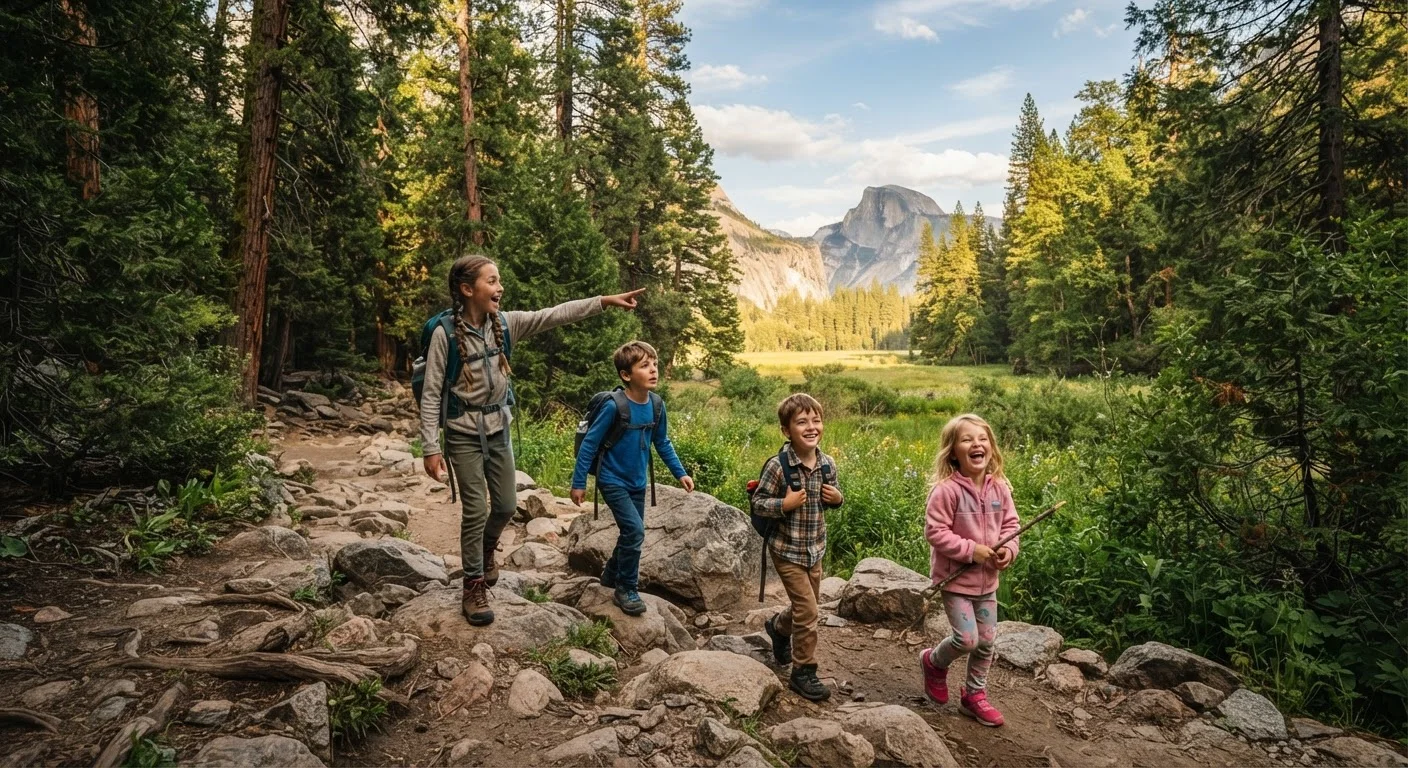
Most parks publish free trail maps at the visitor center or available as a PDF download before your trip. Short loop trails under two miles are common even in large parks and are well-suited to families with younger children. Many visitor centers stock free interpretive guides for specific trails that explain geology, plant life, or historical use at numbered stops. This kind of self-guided walk requires no booking, no fee beyond park entry, and no special equipment. Trail conditions are posted on park websites and updated regularly.
Free interpretive trail guides turn an ordinary walk into a geology or history lesson.
Free fee days and annual passes
The National Park Service designates several fee-free days each year, typically tied to national holidays and events such as National Public Lands Day. Visiting on a fee-free day works best at parks that are not heavily trafficked, since popular parks see significant crowd increases on those days. Families who plan to visit four or more fee-charging parks in a year may find the America the Beautiful Annual Pass a practical option: it covers a single vehicle or named pass holder plus accompanying passengers at all fee-charging federal lands for 12 months.
Four or more park visits in a year makes an annual interagency pass worth the cost.
Wildlife and nature observation
Many parks publish species checklists for birds, mammals, and plants that visitors can download free. Turning wildlife observation into a checklist activity costs nothing and keeps children attentive during drives or walks through habitat areas. Binoculars help but are not required. Dawn and dusk are generally the most productive times for seeing mammals. Rangers at visitor centers can tell you where specific species have been spotted recently, which focuses your effort and increases the likelihood of a sighting.
Ranger staff can tell you exactly where animals have been seen that morning.
Visitor center exhibits
Visitor center museums and exhibits are free with park entry and often contain geology displays, cultural history collections, and interactive stations aimed at younger visitors. They are also practical: air-conditioned in summer, a good place to orient before heading out on trails, and a reliable option when weather turns. Some larger parks, like Grand Canyon and Yellowstone, have multiple visitor centers spread across the park with distinct themes. Spending 30 to 45 minutes at a visitor center before a hike gives children context that makes the landscape more meaningful once they are outside.
Visitor center exhibits give children context that makes the trail more meaningful afterward.
Making the most of your time inside the park
Physical activity is built into every park visit by default. Children who walk several miles of trail in a morning are getting sustained, varied movement that is genuinely hard to replicate at home. Our article on staying physically active without a gym discusses how outdoor environments like parks support long-term movement habits for families.
Pack a lunch and a reusable water bottle. Picnic areas inside park boundaries are free, and eating on-site eliminates one of the biggest per-day travel costs. Many parks have water refill stations near trailheads and visitor centers. If a park has a backcountry or camping permit system, look at it early: walk-in campsites at many parks are cheaper than nearby commercial campgrounds and keep your family immersed in the environment rather than driving back out each night.
The educational payoff of a park visit extends well beyond the day itself. The free learning resources families often overlook include park-specific digital materials, many of which tie directly to school curricula in science and social studies.