
Start with a realistic budget
Before you pick a destination or browse accommodation, you need one number: the total amount your family can spend on this trip without stress. That means looking at your household finances honestly. If you have not yet mapped out where your income goes each month, the family budget breakdown is a useful starting point.
Once you have a ceiling, divide it into rough categories: transportation, accommodation, food, activities, and a buffer of around 10 to 15 percent for costs that appear unexpectedly. These proportions shift depending on how you travel, but having them written down stops one category from quietly consuming the whole budget.
If saving for the trip is still in progress, treat it like any other household goal. A separate savings line, even a small one, makes the timeline concrete.
Write down your budget categories first
Families who split their total budget into categories before searching for destinations are far less likely to overspend in any single area. Even rough percentages (40 percent transportation, 30 percent accommodation, 20 percent food, 10 percent activities) give you a workable framework before a single booking is made.
Choose a destination that fits your numbers
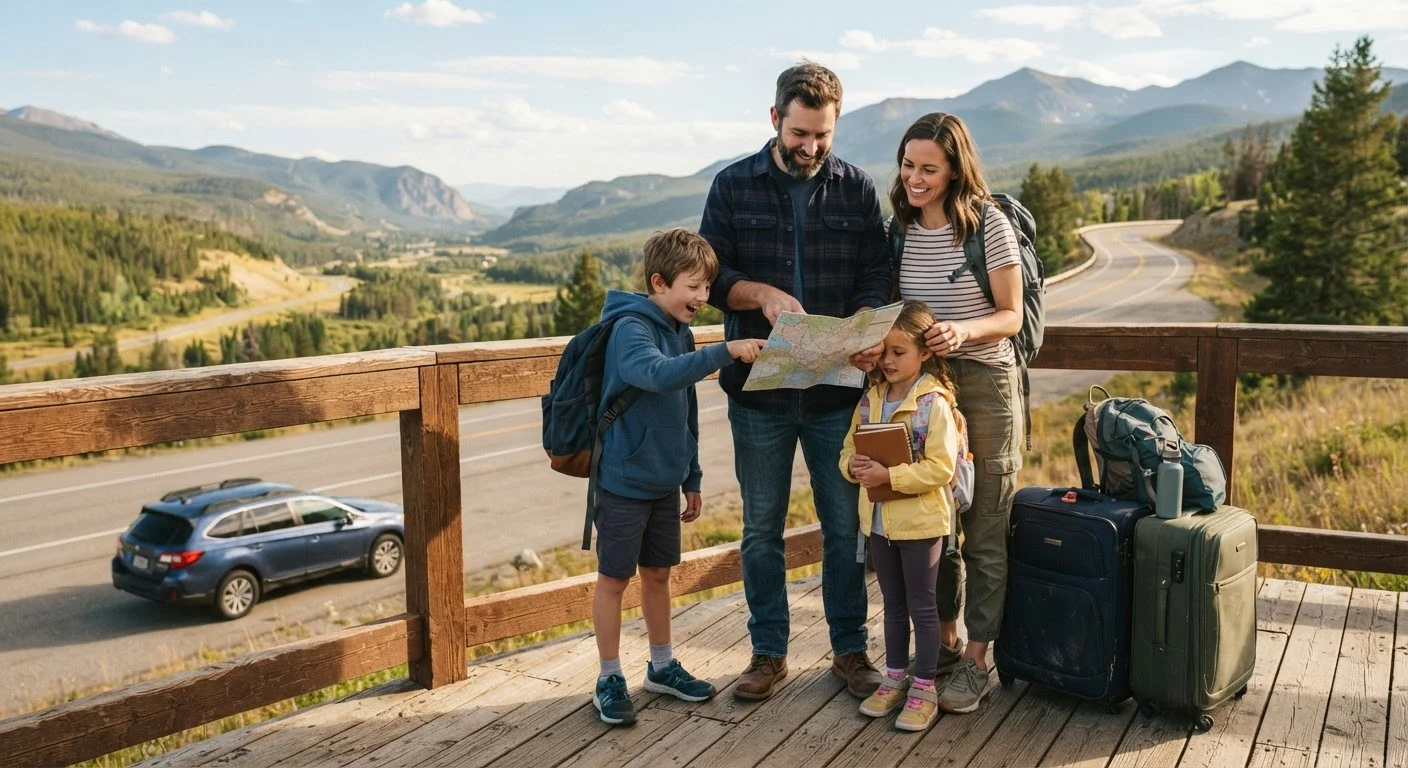
Destination choice does more budget work than almost any other decision. A week at a coastal resort town costs structurally more than a national park road trip, regardless of how carefully you manage other spending.
Useful filters when weighing options:
- Driving distance from home, since transportation is usually the largest single expense for families
- Whether the area has free or low-admission public land (state parks, national forests, public beaches)
- Accommodation options beyond hotels, such as cabin rentals, campgrounds, or vacation rentals with a kitchen
- How tourist-facing the local economy is (tourist-heavy towns charge tourist-facing prices on food and activities)
Families within a half-day's drive of mountains, lakes, or coastline have strong options without the cost of air travel. Family road trips on a tight budget covers practical strategies once you have a route in mind.
Shoulder season
The travel periods just before and after peak season, typically spring and fall, when prices are lower and crowds are smaller.
Vacation rental with kitchen
A privately rented home, apartment, or cabin that includes cooking facilities, allowing travelers to prepare meals instead of eating at restaurants.
Trip buffer
A reserved portion of your travel budget, usually 10 to 15 percent, set aside specifically for unexpected costs rather than planned spending.
Reciprocal admission
A benefit offered by some museum and attraction membership programs where your membership at one location grants free or discounted entry at participating locations elsewhere.
Shoulder-season pricing
Lower rates on accommodation, attractions, and sometimes transportation that apply during less-traveled periods outside of peak summer and holiday windows.
Book transportation and accommodation strategically
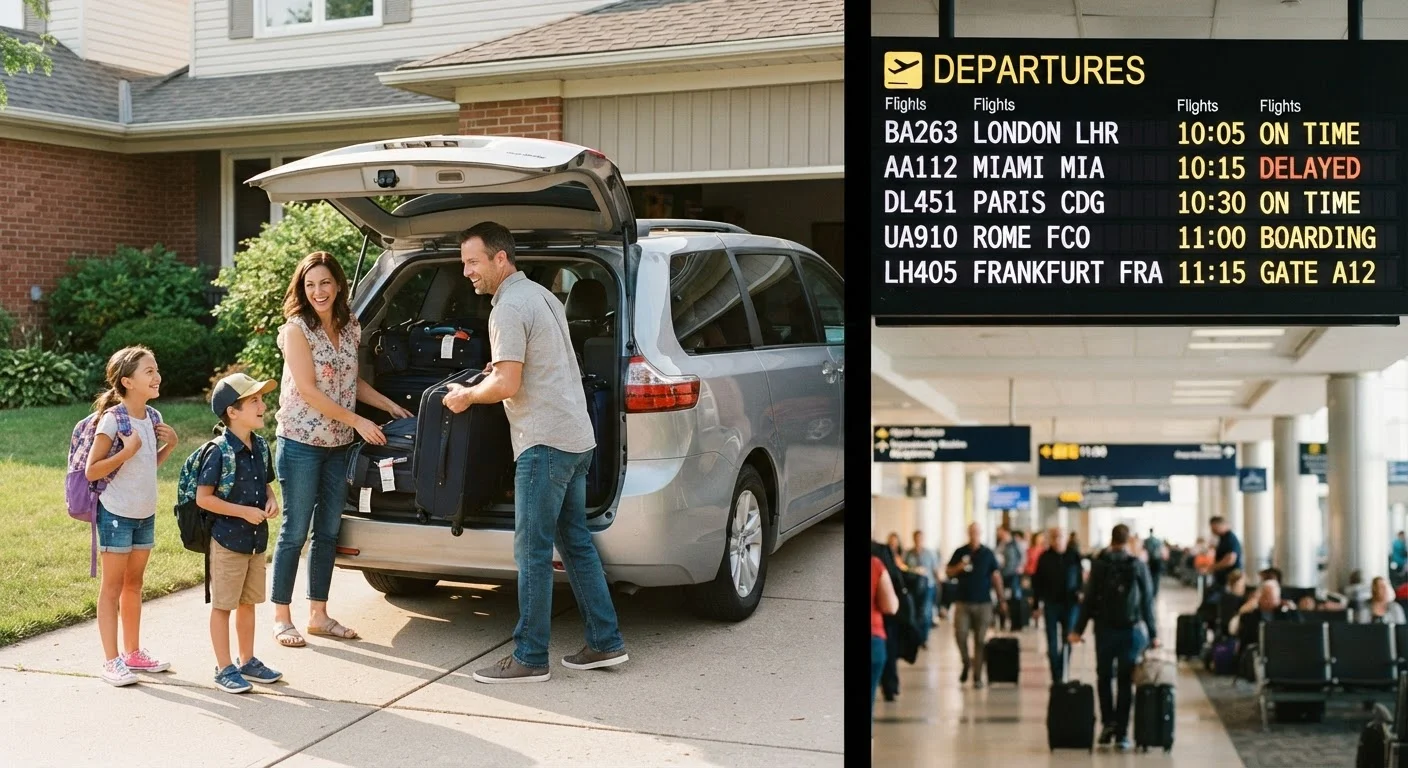
For most families of four or more, driving is the more cost-effective option when the destination is within reasonable range. Airfare multiplied across several passengers, plus checked bags and airport ground transport, adds up fast. The driving vs. flying breakdown lays out the full cost comparison if you are weighing both options.
On accommodation, a rental with a kitchen typically saves more than any discount on a standard hotel room, because it eliminates most restaurant meals. Campgrounds are the most affordable option when the family is comfortable with that style of travel. If you use a hotel, look for properties with included breakfast and free parking, since those reduce daily spending noticeably.
Book two to four months out for summer travel. Flexibility on check-in day, even shifting by one day, sometimes drops nightly rates at the same property. Always check the cancellation policy before confirming, because plans change.
Before finalizing anything, run through the pre-trip booking checklist to make sure no cost category is left unaccounted for.
Plan activities and food without overspending
Most destinations have more free or low-cost activity options than their tourism marketing suggests. National parks, state parks, public beaches, hiking trails, and free museum days are available in most regions of the country. Research the destination's free public programming before paying for any ticketed attraction.
For paid attractions, check whether a multi-day pass or family admission rate is available. Many children's museums, zoos, and science centers offer reciprocal admission through national membership programs, which can pay for themselves on a single trip if you visit two or three participating locations.
Food spending is where many family travel budgets unravel quietly. Restaurant meals at tourist areas carry significant markups. A vacation rental with a kitchen, a portable cooler stocked before departure, and a grocery run on arrival day can cut daily food spending substantially. Pack snacks for activity days to avoid paying vendor prices at attractions. Watch for the full list of common food and activity cost traps in our article on hidden travel costs.
Pack smart and prepare for the unexpected
Packing with cost in mind reduces on-the-road purchases. Bring refillable water bottles, a basic first-aid kit, any prescription medications needed, and common over-the-counter items from home. Convenience-store and resort-shop prices for these items are high.
A portable cooler handles snacks and drinks for travel days and day trips, and it pays for itself quickly. For families with young children, bringing familiar snacks and comfort items also reduces meltdown risk on long driving days.
Build a cash buffer into your budget before you leave, separate from your planned spending. This is not for upgrades; it is for a flat tire, an unexpected entrance fee, or a weather-forced itinerary change. A 10 to 15 percent buffer is a reasonable target. Families still building their general financial cushion may find the framework in building a starter emergency fund useful for structuring this kind of reserved saving.
Verify all entry requirements, current conditions, and any travel advisories through official government and park sources before you go. Conditions change, and confirming details close to your departure date prevents surprises on arrival.