
Set a realistic budget before you search
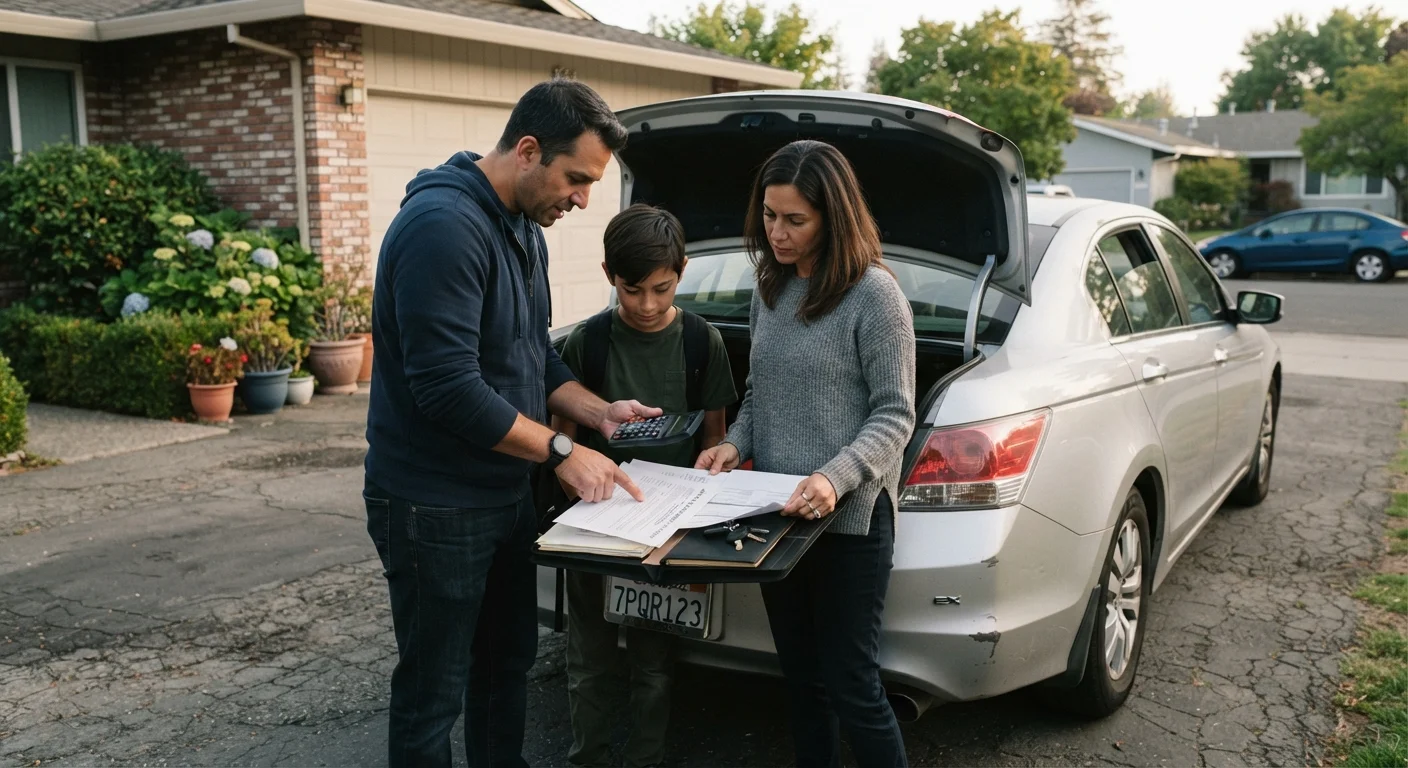
The sticker price on a used car is only one part of what you will actually spend. Before searching listings, calculate what you can afford each month after accounting for insurance, fuel, and routine maintenance, not just a loan payment. Understanding the full cost of ownership is the most important step a first-time buyer can take.
A practical approach is to add up four monthly figures: estimated loan or payment amount, insurance premium, average fuel cost based on how much you drive, and a maintenance reserve. If that total strains your monthly cash flow, the vehicle is priced above your comfortable range, regardless of how attractive the listing looks.
Financing through a bank or credit union before visiting a dealership also gives you a clear ceiling and often a better interest rate than dealer-arranged financing. Securing pre-approval is general preparation, not a binding commitment.
Get pre-approved before you shop
Contact your bank or credit union for a pre-approval before visiting any dealership or meeting a private seller. Pre-approval tells you the maximum loan amount and interest rate you qualify for, so you negotiate from a defined budget rather than accepting whatever financing is offered at the point of sale. Credit unions often have lower auto loan rates than banks or dealer financing arms.
Decide what the vehicle actually needs to do
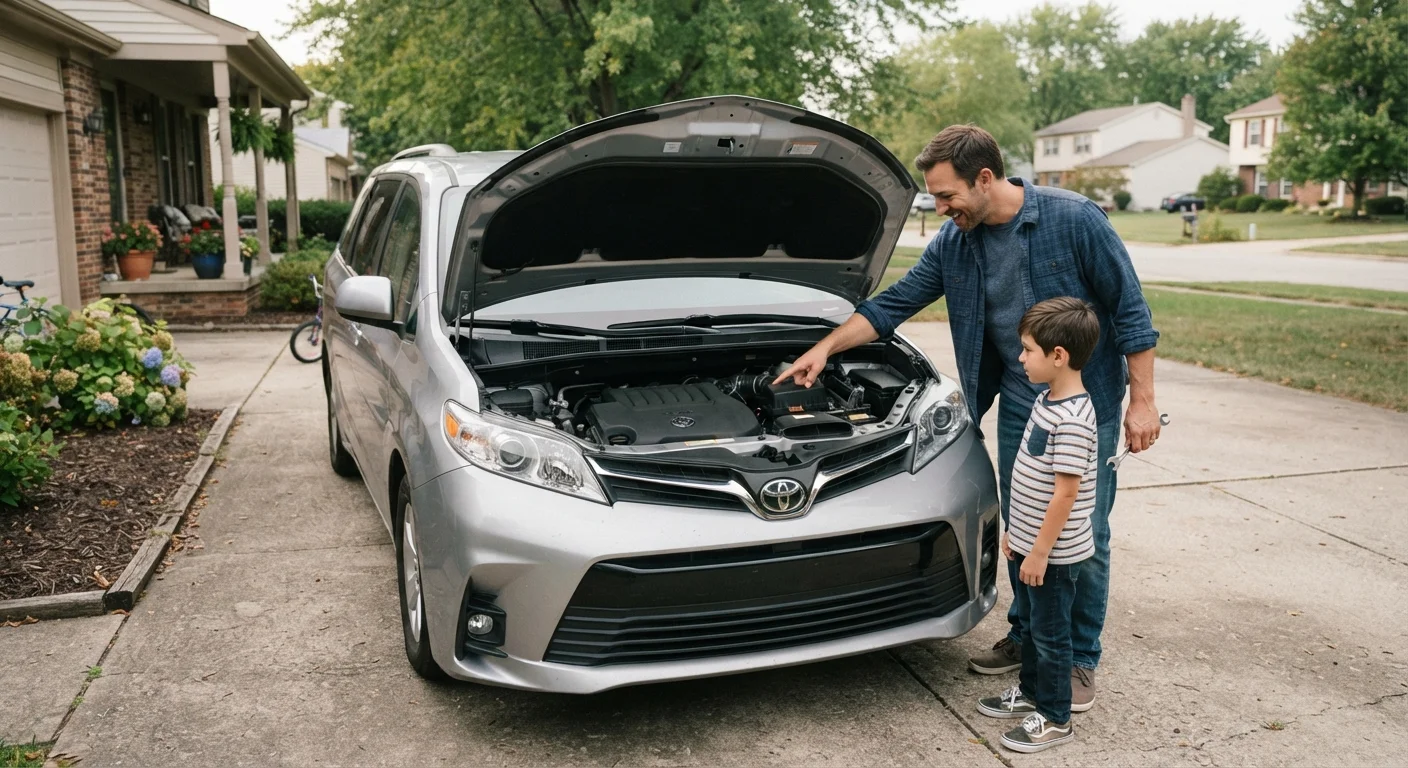
A car that fits your family's actual routine will cost less to own than one bought for an edge case. Consider how many passengers you regularly carry, how much cargo space you use week to week, and whether you drive primarily in city traffic or on highways. Fuel economy differences between a compact sedan and a large SUV add up significantly over several years.
Reliability data by vehicle segment, available from sources such as Consumer Reports and J.D. Power, can help narrow a shortlist before you spend time evaluating individual cars. Vehicles with a strong long-term reliability track record tend to have lower repair frequency and more predictable maintenance costs, which matters when budgeting on a fixed income.
Safety ratings from the National Highway Traffic Safety Administration (NHTSA) and the Insurance Institute for Highway Safety (IIHS) are free to check online and should factor into any family vehicle decision.
Research vehicle history and reliability
Once you find a specific vehicle that interests you, run a vehicle history report using the 17-character VIN (vehicle identification number) printed on the dashboard or door jamb. Services such as Carfax and AutoCheck compile records from title agencies, insurance companies, and inspection databases to flag prior accidents, title problems, odometer inconsistencies, and open safety recalls.
A clean report does not mean a car is problem-free. It means no reported problems appear in those databases. Unreported accidents, maintenance neglect, and mechanical wear will not show up in any report, which is why a report works best as a screening tool rather than a final verdict.
Check NHTSA's recall database at nhtsa.gov using the VIN to confirm whether any open recalls remain unaddressed. Dealers are required to repair open recalls before sale in many cases, but private sellers are not. Knowing recall status before you negotiate is useful leverage either way. See the pre-purchase inspection checklist for a structured walkthrough of what to verify in person.
VIN
A 17-character vehicle identification number unique to each car. It is used to pull history reports, check recall status, and verify title information.
Vehicle history report
A compiled record of a car's documented past, including ownership changes, accident claims, and odometer readings at past inspections. It does not capture unreported events.
Certified pre-owned (CPO)
A used vehicle that has been inspected and reconditioned by a manufacturer or dealership, then sold with a limited warranty. CPO vehicles typically cost more than non-certified used cars.
Pre-purchase inspection
An examination of a used vehicle performed by an independent mechanic before the buyer commits to purchasing. It checks mechanical condition, safety systems, and signs of prior damage.
Open recall
A safety defect notice issued by a manufacturer that has not yet been repaired on a specific vehicle. Recall repairs are performed at no cost to the owner at authorized dealerships.
Total cost of ownership
The full expense of owning a vehicle over time, including purchase price, financing interest, insurance, fuel, maintenance, repairs, registration, and eventual depreciation.
Where to find used cars and what to watch for
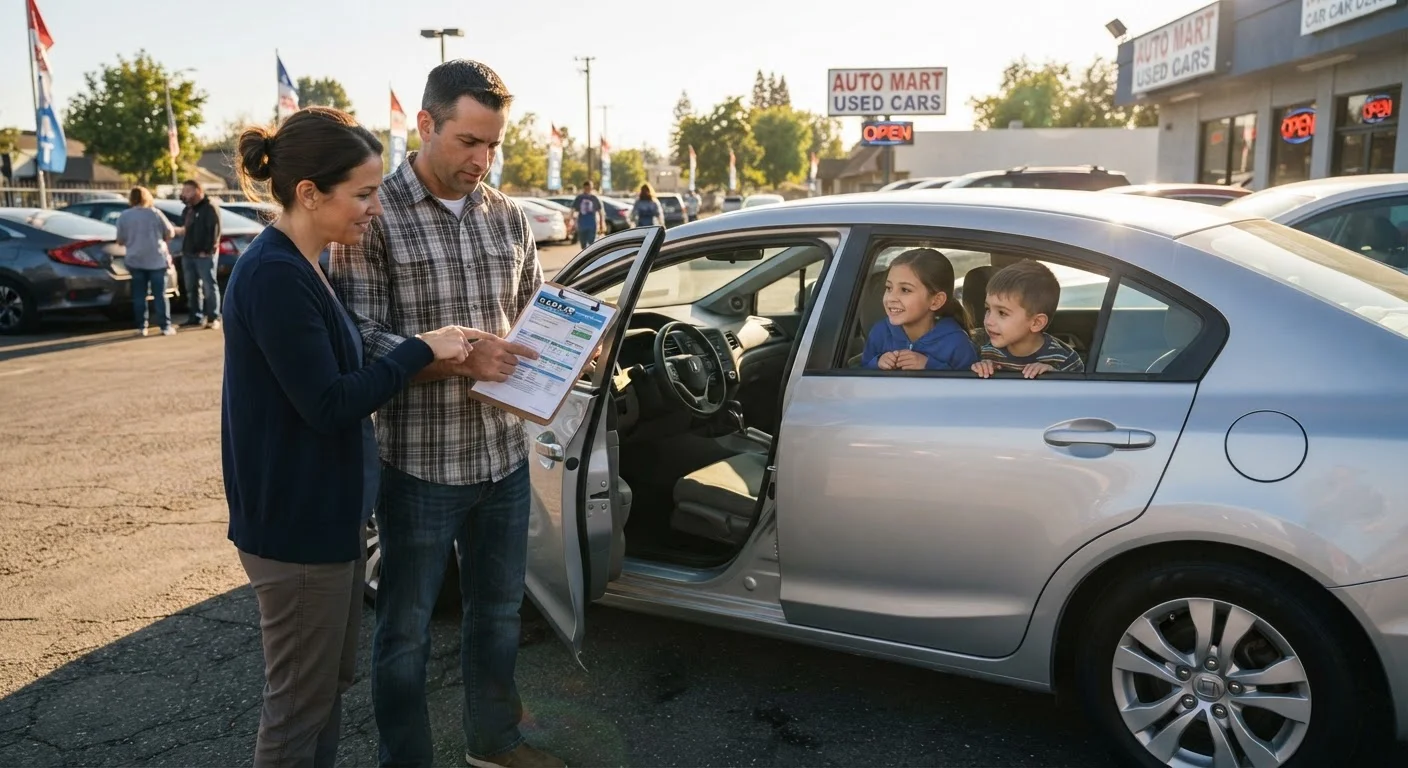
Used vehicles appear across several channels, each with different price dynamics. Franchise dealerships sell certified pre-owned (CPO) vehicles that have passed a manufacturer inspection and carry limited warranties. Independent used-car lots vary widely in quality and transparency. Private sellers list on platforms such as Craigslist, Facebook Marketplace, and AutoTrader, often at lower prices but without any warranty or consumer-protection framework.
Auction sales and fleet disposals can offer lower prices, but viewing and inspection time is typically limited or absent. For most families without mechanical experience, a CPO vehicle or a private-party car that can be independently inspected is a more predictable choice.
Whatever the source, insist on having any serious candidate inspected by an independent mechanic before you commit money. A pre-purchase inspection typically costs between $100 and $200 and can surface problems that would cost far more to fix after purchase. Any seller who refuses to allow an independent inspection is a significant red flag.
Negotiating and closing the deal
Knowing the market value of the specific vehicle before any conversation is the foundation of effective negotiation. Pricing guides such as Kelley Blue Book and Edmunds publish market-range estimates by trim level, mileage, condition, and region. Arrive with a printed or saved reference, not a memory of an estimate.
Itemize any defects the inspection found and any repairs the car needs. These are concrete, quantifiable reasons to offer less than the asking price. A seller may counter, accept, or decline; being willing to walk away is not a tactic, it is a real option when a car does not meet your needs at a fair price.
Before signing, confirm that the title is clean and in the seller's name, that the odometer disclosure statement is included, and that you understand exactly what warranty coverage (if any) transfers with the vehicle. For families who want to build on this foundation, keeping a high-mileage car running without overspending covers maintenance habits that extend useful life after purchase.