

Why this checklist matters for your budget
A used vehicle that looks fine at a glance can carry thousands of dollars in deferred maintenance, hidden collision damage, or worn safety components. For families buying on a budget, those hidden costs are the difference between a sound purchase and a financial setback. This checklist gives you a structured way to evaluate a vehicle before any money changes hands.
If you are still working through the earlier stages of the buying process, the used car buyer's starting-point guide covers budgeting, financing basics, and how to read a vehicle history report. The inspection process below assumes you have already completed that groundwork.
Skipping the mechanic is a costly shortcut
Many families skip the independent mechanic inspection to save the inspection fee, which typically runs $100 to $200. Hidden issues such as frame damage, transmission wear, or failing emissions components can cost several times that amount within the first year of ownership. Treat the inspection fee as a required cost of due diligence, not an optional expense.
A clean history report is not a clean bill of health
Vehicle history reports only include accidents and issues that were formally reported. Private repairs, unreported collisions, and flood damage that was never documented will not appear. This is one reason an in-person mechanic inspection remains necessary even when a report shows no incidents.
How to use this checklist
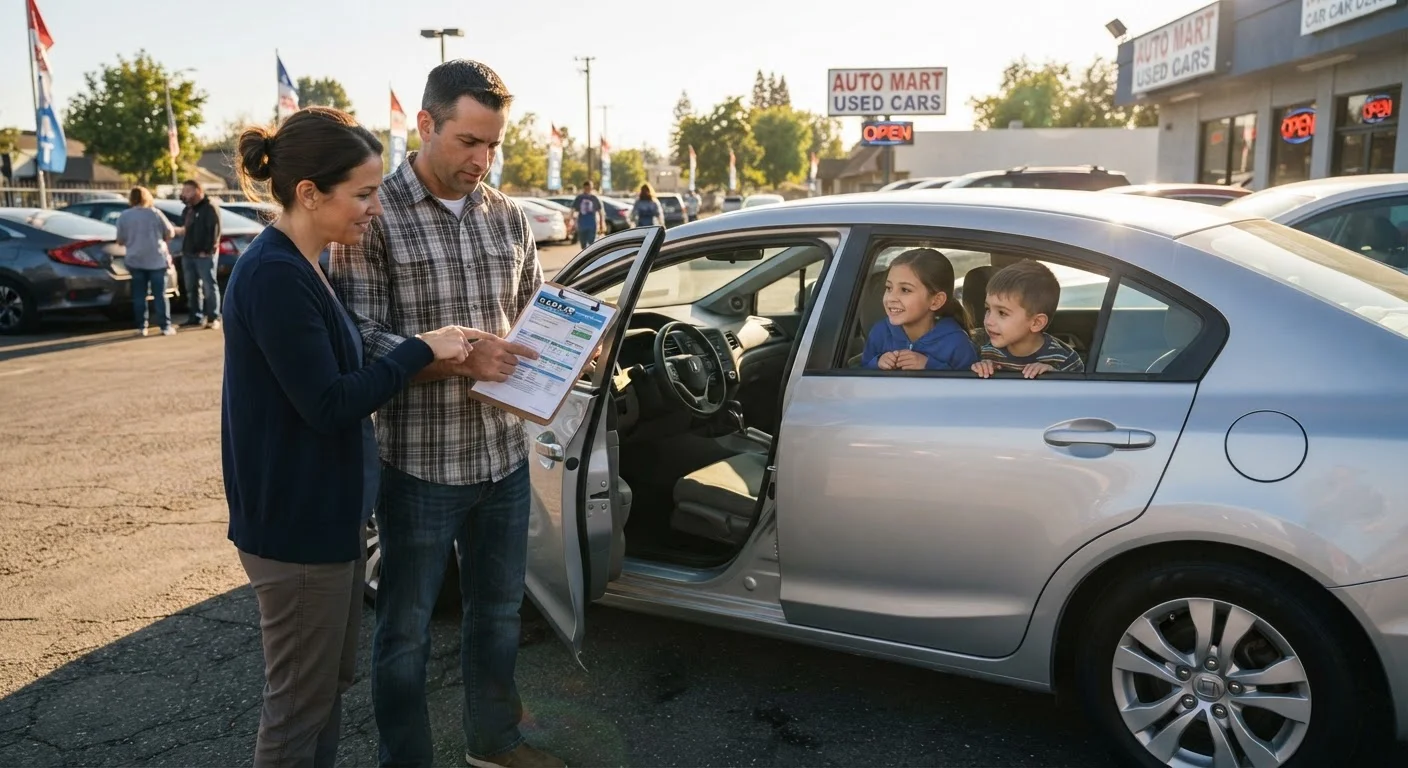
Work through the groups in order: paperwork and research before you leave home, exterior and mechanical checks on-site, and the professional mechanic inspection before you finalize anything. Bring a printed or digital copy so you can mark each item as you go.
Vehicle history report service (e.g., via VIN lookup)
Reveals reported accidents, title status, odometer readings, and ownership history before you visit the vehicle.
OBD-II diagnostic scanner
Reads stored trouble codes from the vehicle's onboard computer, including airbag and emissions system faults.
Flashlight or phone torch
Illuminates the engine bay, undercarriage, and interior corners where problems are easy to miss in normal light.
Tire tread depth gauge
Measures remaining tread depth so you know whether tire replacement should be factored into your budget.
Licensed independent mechanic
Performs a thorough lift inspection and mechanical assessment that goes well beyond what a visual check can catch.
The checklist covers 24 items across six categories. Most families can complete the visual and interior checks in 45 to 60 minutes; allow additional time if you are coordinating a same-day mechanic inspection.
Working through the checklist
The groups below are designed to be completed in sequence. Start with preparation steps at home so you arrive informed, then move through the exterior, engine bay, and interior checks methodically before taking the vehicle on a test drive.
Before you arrive
Exterior and body
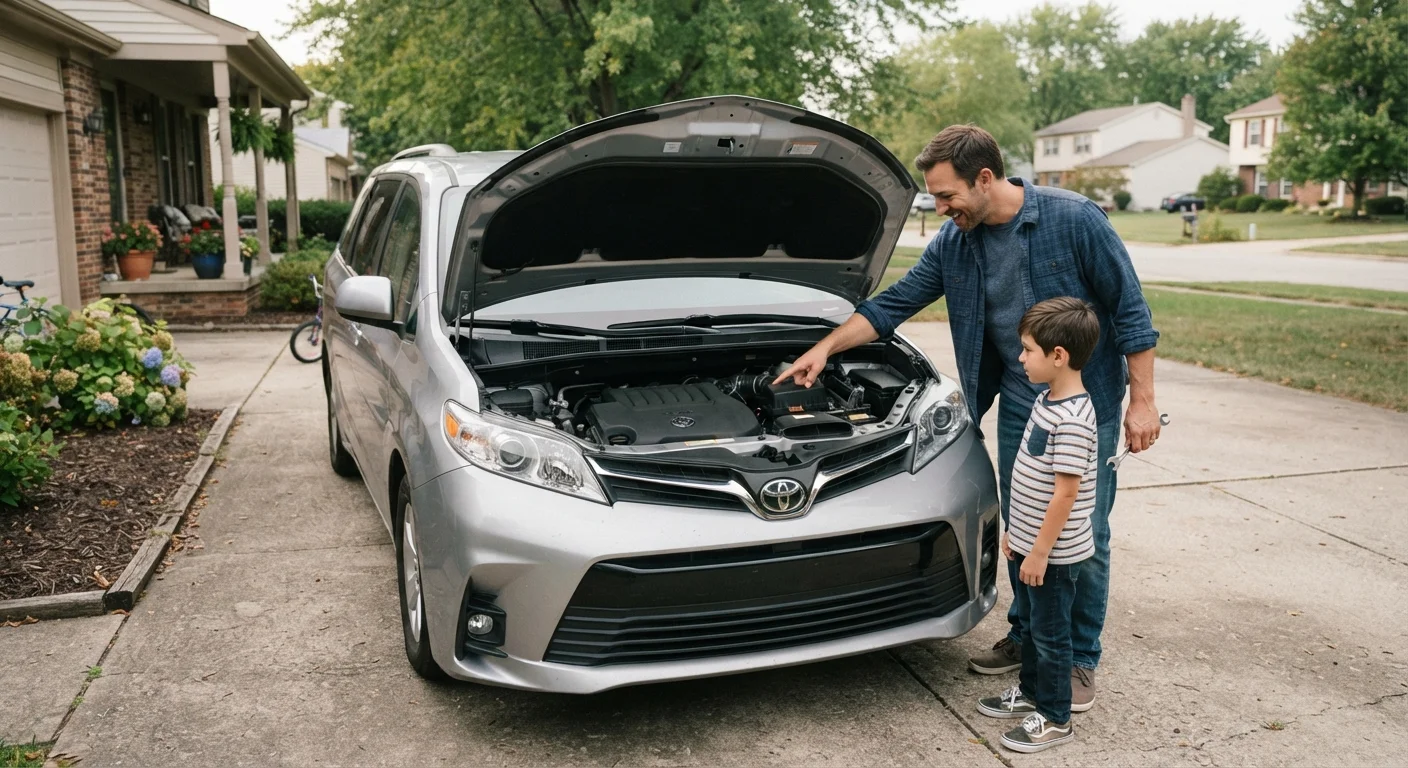
Under the hood
Interior and safety systems
Test drive
Professional mechanic inspection
Once you have completed your own assessment, hand the vehicle off to an independent mechanic. Do not use a shop recommended by the seller. The mechanic's written report gives you both a safety picture and a factual basis for price discussion. For context on what to expect after you buy, the guide to keeping a high-mileage family car running covers early warning signs and maintenance decisions that extend a vehicle's useful life.
Never hand over money before seeing the title
Verify that the seller has physical possession of a clean, lien-free title before you agree to anything. A vehicle with an outstanding loan cannot have its title transferred to you until that lien is satisfied. If the title shows a lienholder, confirm the payoff process directly with that institution before signing or paying.
This article provides general educational information about used vehicle inspections. It is not a substitute for advice from a licensed mechanic or automotive professional familiar with the specific vehicle you are considering.