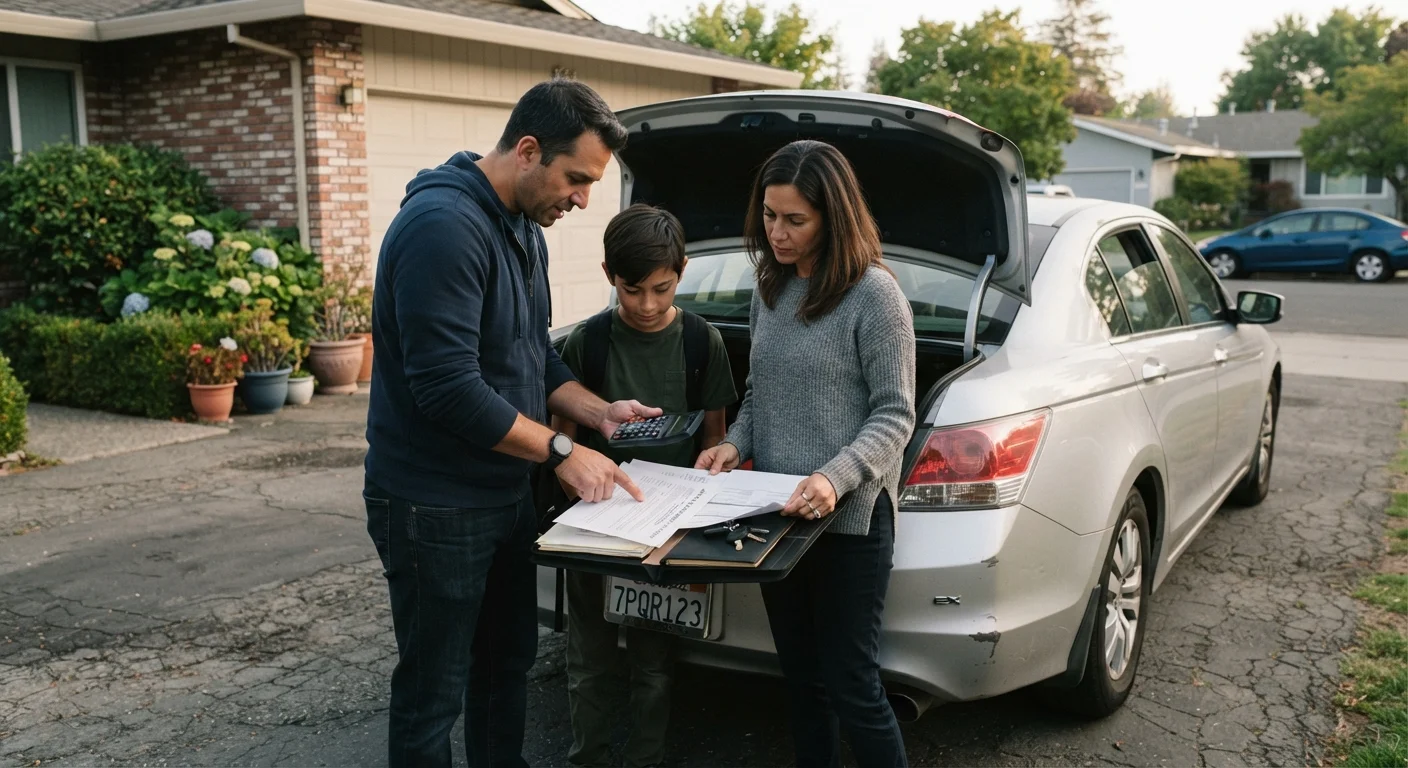


What actually drives your premium up
Auto insurance pricing is not random. Insurers use actuarial models that weigh dozens of variables to estimate the likelihood and cost of a future claim. Some of those variables are within your control; others are not.
Your driving record carries significant weight. At-fault accidents and moving violations raise your risk profile, and that increase in premium can persist for three to five years depending on the insurer and state. Age and driving experience factor in as well, which is why adding a teenage driver to a family policy often produces a sharp jump in the bill.
Where you live matters more than many families realize. Urban zip codes with higher rates of vehicle theft, vandalism, or congestion-related accidents generally produce higher premiums than rural areas, even for drivers with identical records. The vehicle itself also feeds the calculation: a model with expensive parts, high repair labor costs, or a poor safety rating costs more to insure. Families weighing vehicle options can find a detailed breakdown of these tradeoffs in our article on vehicle type and running costs.
Credit history is a factor in most states. Insurers have found a statistical correlation between certain credit indicators and claim frequency, so a lower credit score can translate directly to a higher premium. This practice is regulated differently across states, and a few prohibit it entirely.
3-5 years
How long an at-fault accident affects premiums
Most insurers apply a surcharge for three to five years following an at-fault accident, depending on state regulation and policy terms.
20-30%
Typical premium increase for adding a teen driver
Industry data consistently shows that adding an inexperienced driver to a family policy produces a substantial premium increase, often in the 20 to 30 percent range.
Mistakes that make the bill worse than it has to be
Many families pay more than necessary not because rates are high across the board, but because avoidable errors compound over time. The mistakes below account for a large share of preventable insurance overspending.
Allowing a coverage gap by canceling a policy before a new one is active.
Why it happens: Families sometimes cancel mid-term to save money immediately, or a payment lapses during a tight month without a replacement policy in place.
Never comparing rates at renewal, assuming the current insurer remains competitive.
Why it happens: Switching insurers feels time-consuming, and many policyholders assume loyalty is rewarded with lower rates.
Choosing a vehicle without factoring in its insurance cost.
Why it happens: Buyers focus on sticker price, fuel economy, and monthly loan payments, treating insurance as a fixed cost they will sort out later.
Carrying unnecessarily low liability limits to reduce the premium.
Why it happens: State minimums feel like a reasonable floor, and the lower number translates to an immediately visible savings on the bill.
Failing to report life changes that qualify for discounts.
Why it happens: Policyholders rarely think to notify their insurer about changes like a shorter commute, a student driver moving away to college, or completing a defensive driving course.
Insurance is one piece of the broader ownership cost picture. For a fuller accounting of what vehicle ownership costs a family annually, see our guide on the real cost of car ownership.
Coverage decisions on a tight budget
Reducing cost does not always mean reducing protection. The relationship between deductibles and premiums is direct: a higher deductible lowers the monthly or semi-annual premium because you absorb more of the cost in the event of a claim. For families with a reliable emergency fund, raising the deductible on collision or comprehensive coverage is a straightforward way to reduce ongoing expenses.
Comprehensive and collision coverage on an older, lower-value vehicle is worth scrutinizing. If the vehicle's market value is low enough that a total-loss payout would be modest, the annual premium for those coverages may exceed what you would realistically recover. State minimum liability requirements still apply regardless of vehicle age, so liability coverage is not optional.
Bundling home and auto policies with one insurer frequently produces a multi-policy discount, though the total cost should still be compared against separate policies at renewal. Usage-based programs, which calculate premiums partly on actual driving behavior or mileage, can benefit families whose vehicles sit parked much of the week.
These same budget-management habits apply in other spending categories. Our piece on hidden costs in family travel covers how small overlooked charges in other areas quietly drain household budgets.
This article is for general informational purposes only and does not constitute personalized financial or insurance advice. Coverage requirements, pricing factors, and regulations vary by state and individual circumstance. Consult a licensed insurance professional for guidance specific to your situation.