
Why grocery myths are expensive
Most households treat grocery shopping as routine, which means the habits behind it rarely get questioned. That is where the cost leaks in. A belief that sounds sensible, like buying the biggest package or always choosing the store with the lowest advertised prices, can quietly inflate a family's food bill month after month.
This article looks at the most common grocery misconceptions, what the evidence actually shows, and where families tend to lose money without realizing it. For related reading on how food choices intersect with health and cost, see what nutrition research says about affordable whole-food eating.
Myth
Buying in bulk always saves money.
Fact
Bulk purchases only save money when the item gets fully used before it expires or spoils.
Bulk pricing can lower the cost per unit, but that math only holds if nothing goes to waste. Perishables like produce, dairy, and bread bought in large quantities often spoil before a family finishes them. The savings on paper vanish once wasted food is factored in. Bulk buying makes more sense for shelf-stable staples with long expiration dates, like dried beans, rice, or canned goods, that a household reliably uses at a steady rate.
Myth
Name-brand products are higher quality than store brands.
Fact
Store-brand and name-brand products are often made by the same manufacturers, sometimes in the same facilities.
Consumer Reports and academic researchers have tested store-brand versus name-brand products across many categories and found quality differences are often negligible or nonexistent. In some product categories, store brands score as well or better on taste and ingredient profiles. The price gap between them, typically 20 to 30 percent, rarely reflects a meaningful difference in what you get. Checking the ingredient list on both labels is a more reliable guide than the brand name on the front.
Myth
Shopping at a discount store means you are always getting the lowest total bill.
Fact
Total cost depends on which specific items you buy, not just the store's general reputation for low prices.
Discount stores often have genuinely low prices on some categories and less competitive prices on others. A store known for cheap cereal may charge more for produce or meat than a nearby competitor. Families who assume one store covers all their needs without comparing unit prices on specific items can end up overpaying without knowing it. Checking the unit price label on the shelf, rather than the total package price, is the most direct way to compare.
Myth
Coupons always reduce your grocery bill.
Fact
Coupons tend to work only when they apply to items you would have bought anyway at a price that still beats alternatives.
Coupon-driven shopping can push families toward more expensive name brands or larger quantities than they need, even after the discount. A coupon for a product that costs more than the generic version, even after the discount, is not saving money. The same applies to coupons that prompt buying something unnecessary just to capture a deal. Coupons work best when they are applied to planned purchases rather than used as the reason to buy something.
Myth
Shopping hungry does not really affect how much you spend.
Fact
Research consistently shows that shopping while hungry increases the number of items purchased and spending on high-calorie, impulsive choices.
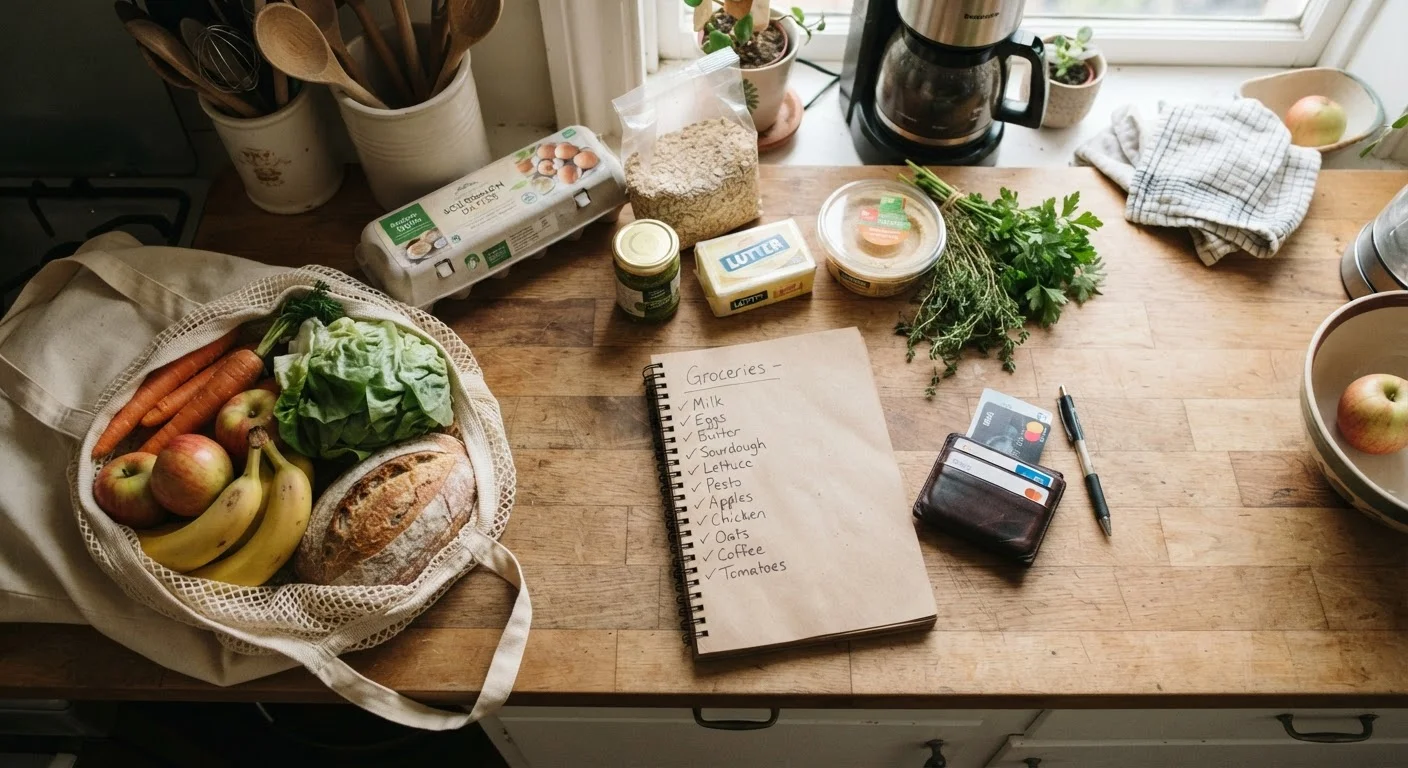
A study published in JAMA Internal Medicine found that people who shopped hungry bought more high-calorie foods than those who shopped after eating. Hunger appears to trigger short-term reward seeking, which makes unplanned purchases more likely. Eating something before a grocery trip is a simple, free way to reduce this effect. A written list used consistently is a complementary habit that limits straying regardless of hunger level.
Myth
Fresh produce is always more nutritious and worth the higher cost over frozen.
Fact
Frozen fruits and vegetables are typically harvested and frozen at peak ripeness, which preserves most of their nutrients.
Fresh produce begins losing some nutrients after harvest, and by the time it travels from farm to store shelf and sits in your refrigerator, some of that nutritional content has declined. Frozen vegetables are processed quickly after harvest, and multiple studies have found their vitamin and mineral content is comparable to fresh, sometimes higher for certain nutrients. Frozen options also reduce spoilage waste. The choice between fresh and frozen should depend on intended use and price, not an assumption that fresh is always superior.
The hidden math behind food waste
Food waste is one of the most underappreciated budget problems in American households. The U.S. Department of Agriculture has estimated that households waste between 30 and 40 percent of the food supply, and a meaningful share of that happens at home, not in stores or restaurants. When a family buys more than they use, the savings from any deal disappear into the trash.
Meal planning before shopping directly cuts this waste. A written plan ties purchases to specific meals, which reduces the odds of buying ingredients that sit unused. A shopping list built from that plan further narrows impulse buying. Neither step costs anything.
The connection between processed food pricing and real value is also worth understanding. Why cheap processed food often is not the bargain it appears covers how low sticker prices can carry hidden costs over time.
This article is for general informational purposes only and does not constitute financial or dietary advice. Readers should consult qualified professionals for guidance specific to their situation.