
The price tag problem with processed food
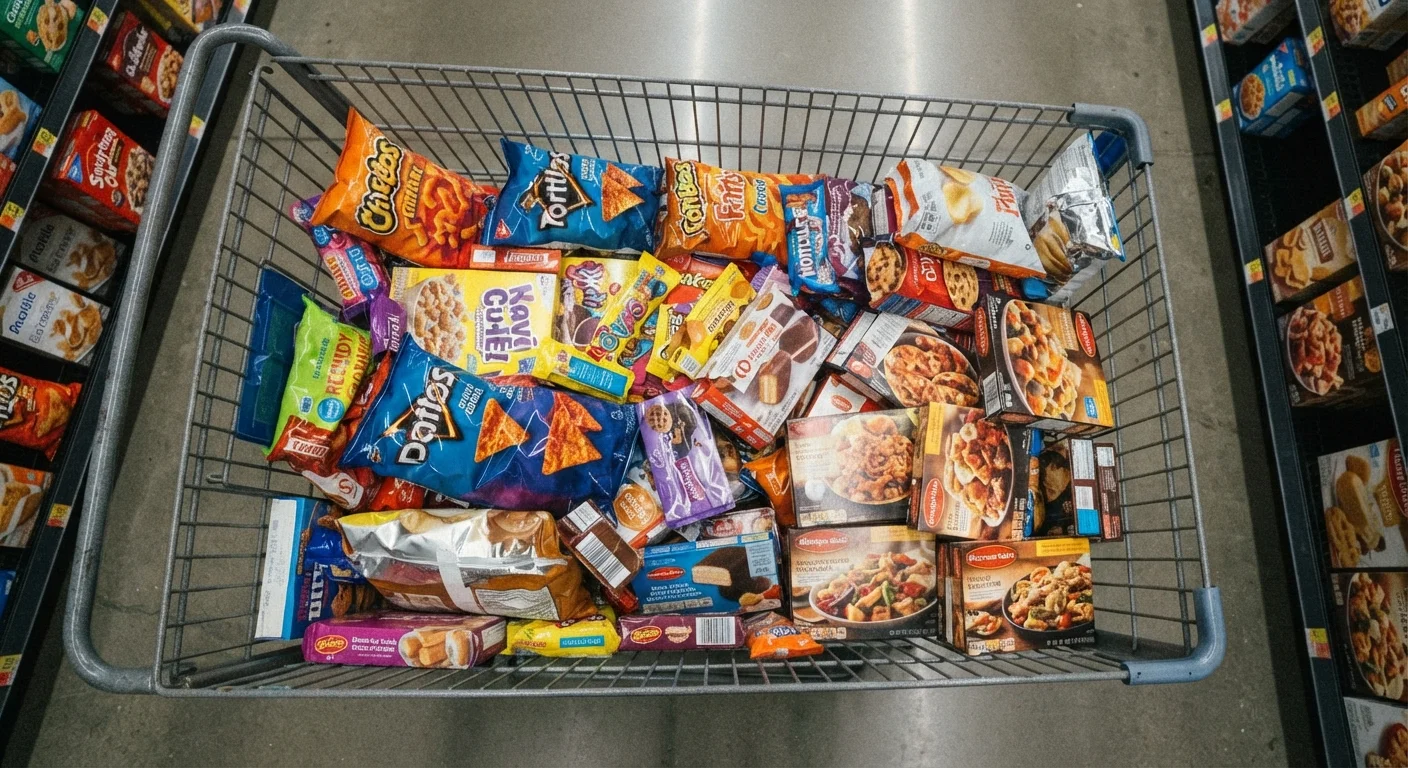
A box of crackers for $1.49. A frozen entree for $2.00. A bag of chips for $3.00. At face value, ultra-processed foods look like a smart move for a family watching every dollar. The problem is that price per package and price per unit of nutrition are two different numbers, and the second one rarely appears on the shelf.
Ultra-processed foods, a category defined by researchers at the University of Sao Paulo's NOVA classification system as products made predominantly from industrial ingredients with little or no whole food, are formulated to be palatable and shelf-stable. They are not, as a category, formulated to be filling or nutritionally complete. That distinction matters for the household budget in ways that are easy to miss at the register.
This is general nutrition information for educational purposes. Families with specific dietary needs or health conditions should consult a registered dietitian or qualified healthcare provider before making significant changes to their eating patterns.
For a broader look at what the research says about affordable eating, see what nutrition science says about whole-food eating on a budget.
Common mistakes families make when weighing processed food costs
Comparing unit price without accounting for satiety or nutrient density.
Why it happens: Grocery store pricing displays cost per ounce or per unit, not cost per gram of protein or per hour of fullness. Shoppers naturally use the number that is visible.
Treating convenience as free when calculating food cost.
Why it happens: Time pressure is real, and processed food genuinely saves time. Families often absorb the extra cost without tracking it because the time benefit feels tangible and the price difference feels small per purchase.
Assuming that eating processed food more often is offset by eating less of it.
Why it happens: Processed foods are engineered to be palatable, which can make portion control harder. Research published in Cell Metabolism by Hall et al. in 2019 found that subjects on an ultra-processed diet ate more calories per day than those on an unprocessed diet, even with unrestricted access to both.
Ignoring the long-term cost signal in diet-related health patterns.
Why it happens: Health costs from diet appear years later, making them feel disconnected from daily grocery decisions. The receipt from today's shopping trip does not include a line for future healthcare expenses.
Relying on processed food for children's meals because it appears child-friendly.
Why it happens: Processed foods marketed toward children are often packaged to appeal to kids, making parents assume those products fit children's nutritional needs. Familiarity also reduces mealtime friction, which has real value for busy households.
Understanding these errors is the first step toward spending smarter at the grocery store. For a deeper look at which food-spending beliefs commonly backfire, see grocery spending myths that cost families more than they realize.
What the research actually shows
~58%
Share of US adult calories from ultra-processed foods
A 2016 analysis in the <cite>BMJ Open</cite> by Martínez Steele et al. estimated that ultra-processed foods account for roughly 58% of daily caloric intake among US adults.
500 kcal/day
Extra calories consumed on an ultra-processed diet
The 2019 Hall et al. study in <cite>Cell Metabolism</cite> found participants on an ultra-processed diet consumed approximately 500 more calories per day compared to those eating an unprocessed diet.
$1.50
Estimated daily cost difference, whole foods vs. ultra-processed
A 2013 meta-analysis in the <cite>BMJ Open</cite> by Rao et al. estimated that healthier diets cost roughly $1.50 more per day per person than less healthy diets, less than commonly assumed.
A growing body of nutrition research associates frequent ultra-processed food consumption with higher rates of obesity, type 2 diabetes, and cardiovascular disease. A 2019 study published in Cell Metabolism by Hall et al. found that participants assigned an ultra-processed diet ate significantly more calories per day and gained weight compared to those on an unprocessed diet, even when both diets were matched for offered calories and macronutrients. The ultra-processed group ate faster and reported less satisfaction after meals.
The downstream financial implication is straightforward. Chronic diet-related conditions carry costs: more doctor visits, more prescriptions, more missed work. None of those costs show up on the grocery receipt, but they are real. This article does not suggest processed food alone causes disease, or that any one family food choice determines long-term health outcomes. Diet is one factor among many, and individual circumstances vary widely.
Practical ways to reframe value at the grocery store
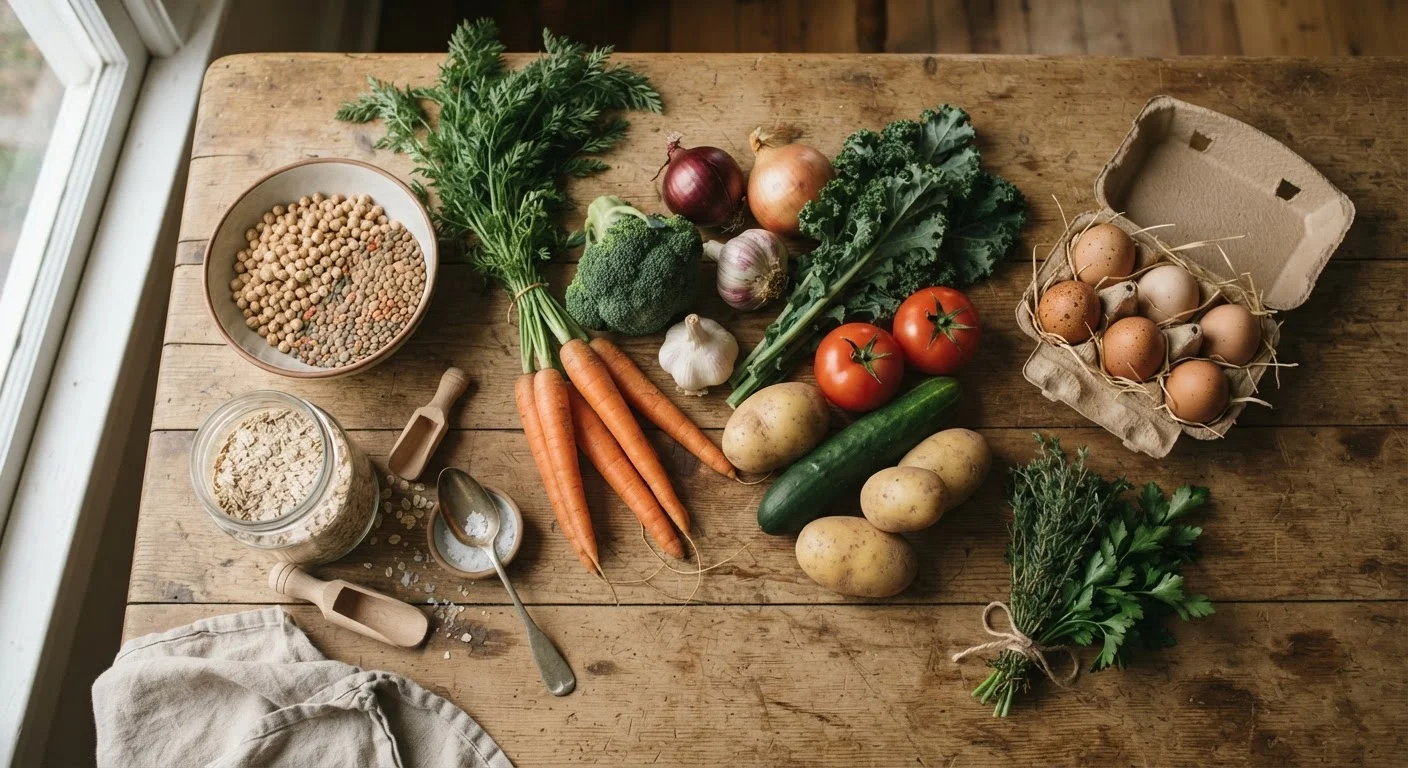
Comparing foods by cost per gram of protein or fiber, rather than cost per package, changes the math quickly. Dried lentils, canned beans, rolled oats, frozen spinach, and eggs consistently rank among the lowest-cost sources of protein, fiber, and micronutrients available in US grocery stores. A half-cup of dried black beans, which costs roughly $0.15 to $0.20 depending on store and region, provides about 7 grams of protein and 7 grams of fiber. Few $1.49 snack packages come close.
Batch cooking simple staples on weekends reduces reliance on convenient processed options during busy weekdays, which is typically when those purchases happen. A pot of rice and beans, a tray of roasted frozen vegetables, and a dozen hard-boiled eggs can cover several days of lunches and sides for a family of four at a cost that is hard to match with packaged alternatives.
None of this requires eliminating processed food entirely. The goal is to see it clearly for what it is: sometimes convenient, often not as inexpensive as it appears, and worth measuring against the alternatives before filling the cart.