
How the two formats differ at a basic level
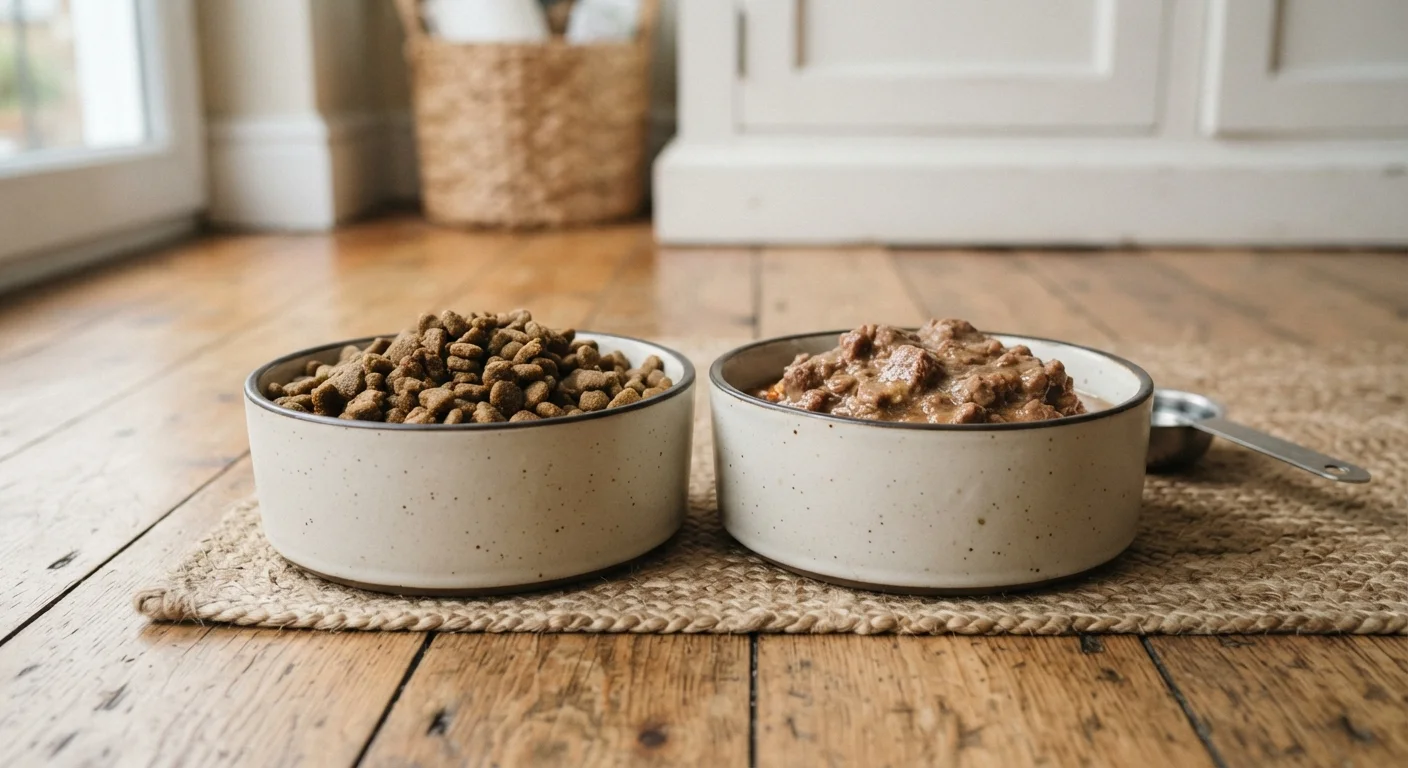
Dry kibble is made by cooking a mixture of proteins, grains or grain alternatives, fats, vitamins, and minerals at high temperature and pressure, then extruding it into small pieces that contain roughly 10 percent moisture. Wet food starts with similar ingredients but is sealed in a can or pouch with added water or broth and cooked inside the container, leaving it with 70 to 80 percent moisture content.
That moisture difference is the most consequential structural fact about the two formats. It changes calorie density, shelf life, cost per serving, and how each format fits into a pet's daily water intake. A cup of kibble contains far more calories and nutrients per ounce than a cup of wet food, which is mostly water by weight. This means you need to compare the two on a cost-per-calorie or cost-per-nutrient basis rather than by package price or volume.
If you are still building familiarity with pet food labels, the starting point for budget-conscious families covers how to read guaranteed analysis panels and portion guidance before comparing formats.
Nutritional profile and what AAFCO compliance means
The Association of American Feed Control Officials (AAFCO) publishes nutrient profiles for dogs and cats at different life stages. A pet food labeled "complete and balanced" for a given life stage must meet those profiles, whether the food is kibble or wet. The format itself does not determine nutritional adequacy; the formulation and the label statement do.
Dry kibble tends to be higher in carbohydrates than wet food because starches help bind the extruded pieces together. Wet food generally has a higher protein percentage on a dry-matter basis (meaning after you account for the water content) and a lower carbohydrate percentage. For cats, which are obligate carnivores, some veterinary nutritionists consider a higher protein, lower carbohydrate profile more appropriate, though the science on optimal macronutrient ratios for companion animals is still being studied.
Neither format is inherently superior nutritionally. A well-formulated kibble can meet every nutrient requirement a cat or dog has. So can a well-formulated wet food. The safest approach is to confirm that whichever product you choose carries the AAFCO statement for your pet's life stage.
| Criterion | Dry kibble | Wet food |
|---|---|---|
| Moisture content | Around 10% | 70 to 80% |
| Cost per calorie | Lower | Higher |
| Shelf life (opened) | 4 to 6 weeks | 2 to 3 days |
| Typical protein % (dry matter) | Lower to moderate | Moderate to high |
| Carbohydrate content | Generally higher | Generally lower |
| Dental benefit | Some mechanical cleaning | Minimal |
| Portability and storage ease | High | Moderate |
| Palatability for picky eaters | Varies | Often higher |
Cost per serving: where the real numbers sit
A 30-pound bag of dry dog food might cost between $25 and $50 depending on the brand tier, and can provide roughly 120 or more cups of food. A medium-sized dog eating two cups per day gets about 60 days of meals from that bag. A comparable supply of wet food in cans would cost considerably more for the same caloric content because you are paying for water weight alongside ingredients.
For cats, the gap is smaller because daily portions are smaller, but wet food still runs higher per calorie delivered. Families who use wet food as a topper (a small spoonful over kibble) rather than a full meal stretch a case of cans much further and add hydration without doubling the food budget.
The strategies for stretching your pet food budget article covers bulk buying, store-brand comparisons, and portion discipline in more detail.
~10%
Moisture content of dry kibble
Compared to 70 to 80 percent in wet food, this gap directly affects hydration contribution per meal.
3-4x
Typical cost-per-calorie difference
Wet food commonly costs several times more per calorie delivered than dry kibble in the same brand tier.
2-3 days
Safe fridge storage after opening wet food
Opened cans or pouches should be covered and refrigerated; food left out longer than two hours at room temperature can spoil.
Practical trade-offs beyond price and nutrition
Dry kibble has a shelf life of 12 to 18 months in an unopened bag and stays usable for four to six weeks after opening when stored in an airtight container away from heat and moisture. Wet food in a can or pouch has a comparable unopened shelf life, but once opened, it must be refrigerated and used within two to three days. For families with one small cat, that means managing waste carefully, since a full can may exceed one day's portion.
Kibble also has a well-documented mechanical effect on teeth. The chewing action can reduce tartar buildup in dogs, though this effect is less consistent in cats and does not replace professional dental care. Some wet foods, particularly pates, require no chewing at all, which can contribute to plaque accumulation over time if no other dental care is provided.
For pets with a history of kidney disease, lower urinary tract disease, or chronic dehydration, the moisture in wet food has practical value that price alone does not capture. A veterinarian is the right person to weigh in on whether a specific pet's health history makes one format preferable. This article is general information and does not substitute for that guidance.
Families considering homemade food as a third option can find a balanced look at that choice in the guide on homemade pet food trade-offs.