
The AAFCO statement: the one non-negotiable
The Association of American Feed Control Officials (AAFCO) sets nutritional standards that any pet food sold in the U.S. must meet to be labeled "complete and balanced." That statement, printed on the back or side panel, is the baseline test for both store brands and name brands. Without it, a product is a treat or a supplement, not a primary diet.
The statement comes in two forms. One indicates the food was formulated to meet AAFCO nutrient profiles. The other states the food was tested through an AAFCO feeding trial. Feeding-trial claims reflect actual animal testing rather than calculated formulation, though formulation-based claims are legally valid and widely accepted by veterinarians. Check which type a product carries before comparing price.
For a full walkthrough of how to find and interpret this statement alongside ingredient lists and guaranteed analysis figures, see how to read a pet food label.
What the ingredient list and guaranteed analysis actually tell you
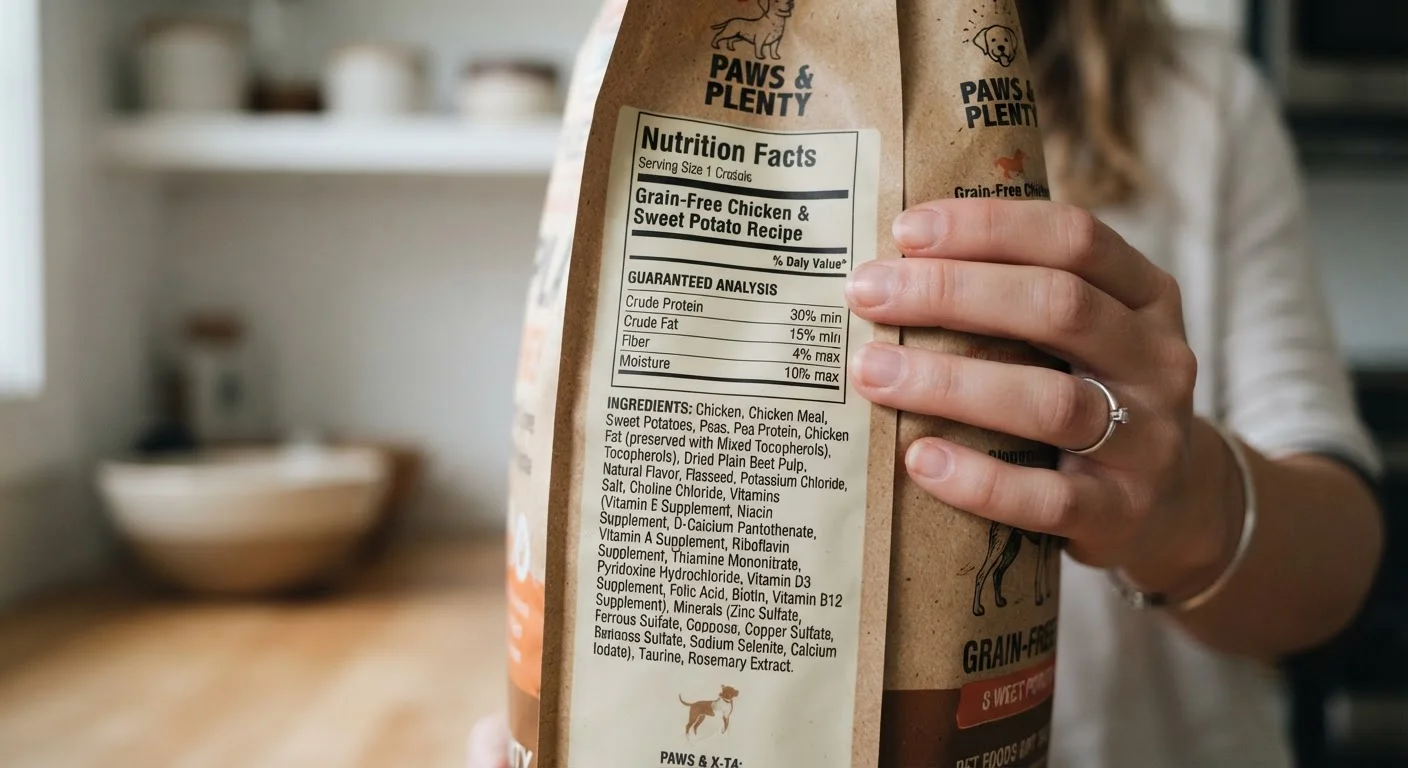
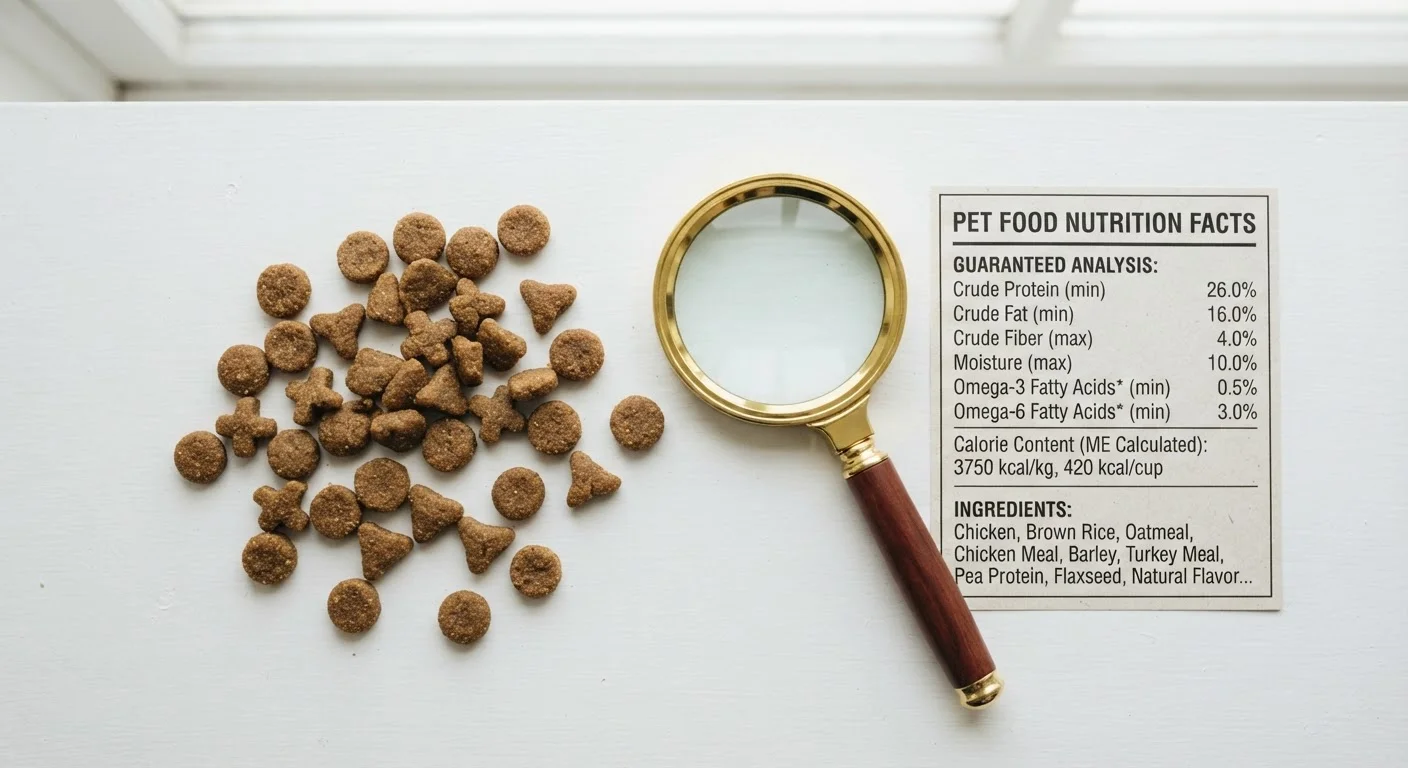
Ingredients appear in descending order by pre-cooking weight. A named protein source (such as chicken, beef, or salmon) in the first position is a reasonable signal, but weight before cooking includes water, so a meat meal lower on the list can contribute more dry protein than a whole-meat first ingredient suggests. The guaranteed analysis shows minimum percentages of crude protein and fat, and maximum percentages of moisture and fiber. These numbers let you compare nutrient density across products at different price points.
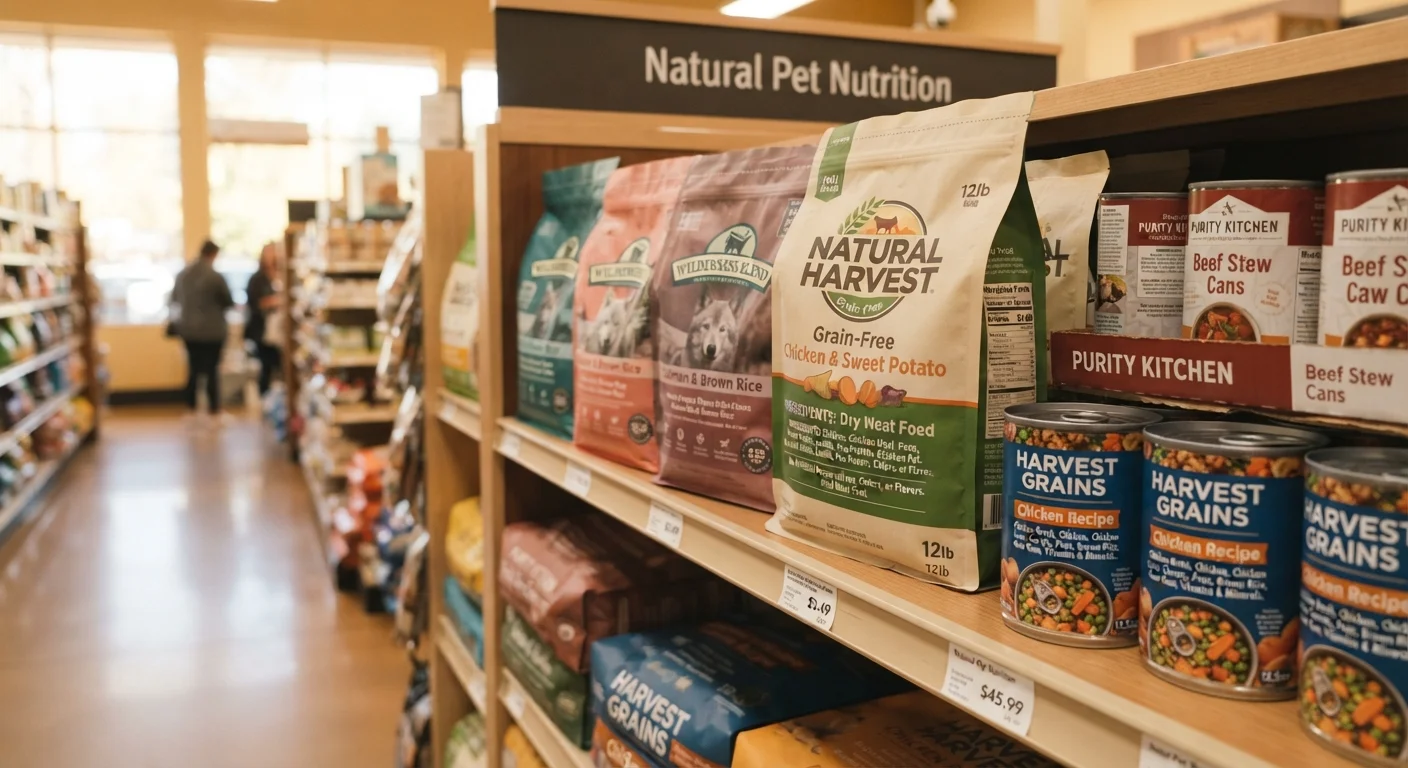
Marketing terms on the front panel, such as "premium," "natural," or "holistic," carry no AAFCO definition and no regulatory weight. The back of the package is where the comparable data lives. Ingredient signals worth knowing covers specific terms and red flags families encounter when shopping across brand tiers.
| Store-brand pet food | Name-brand pet food | |
|---|---|---|
| AAFCO compliance | Available; check each label | Available; check each label |
| Typical sticker price | Lower per bag | Higher per bag |
| Cost per serving | Often lower; verify with feeding guide | Varies; can close gap with feeding volume |
| Ingredient transparency | Varies by retailer and manufacturer | Varies; some publish sourcing details |
| Manufacturing origin | Often same co-packers as name brands | Proprietary or co-packed facilities |
| Recall history visibility | Check FDA database | Check FDA database |
| Therapeutic diet availability | Generally not available | Some lines have clinical research support |
Manufacturing origin and quality control
A portion of store-brand pet food is produced in the same facilities as name-brand products, using contract or co-packing arrangements. This does not mean every store-brand product is identical to a name-brand equivalent, because formulations can differ significantly, but it does mean "store brand" is not automatically a proxy for lower manufacturing standards.
What does matter is transparency. Some manufacturers, regardless of brand tier, publish their quality-control processes, sourcing practices, and recall histories. Others do not. The FDA maintains a public database of pet food recalls. Checking a brand's record there takes a few minutes and gives a factual basis for comparison that marketing copy cannot provide.
It is also worth knowing that affordable price does not equal poor nutrition, provided the label clears the checks above.
Cost per serving: the number that matters for budgets
Bag price alone misleads. A larger bag at a higher price can cost less per serving than a smaller bag on sale, and a denser kibble fed at smaller volumes can be cheaper daily than a lighter formula requiring larger portions. To calculate cost per serving, divide the total bag price by the number of servings listed on the feeding guide, or divide price per ounce by the ounces per serving.
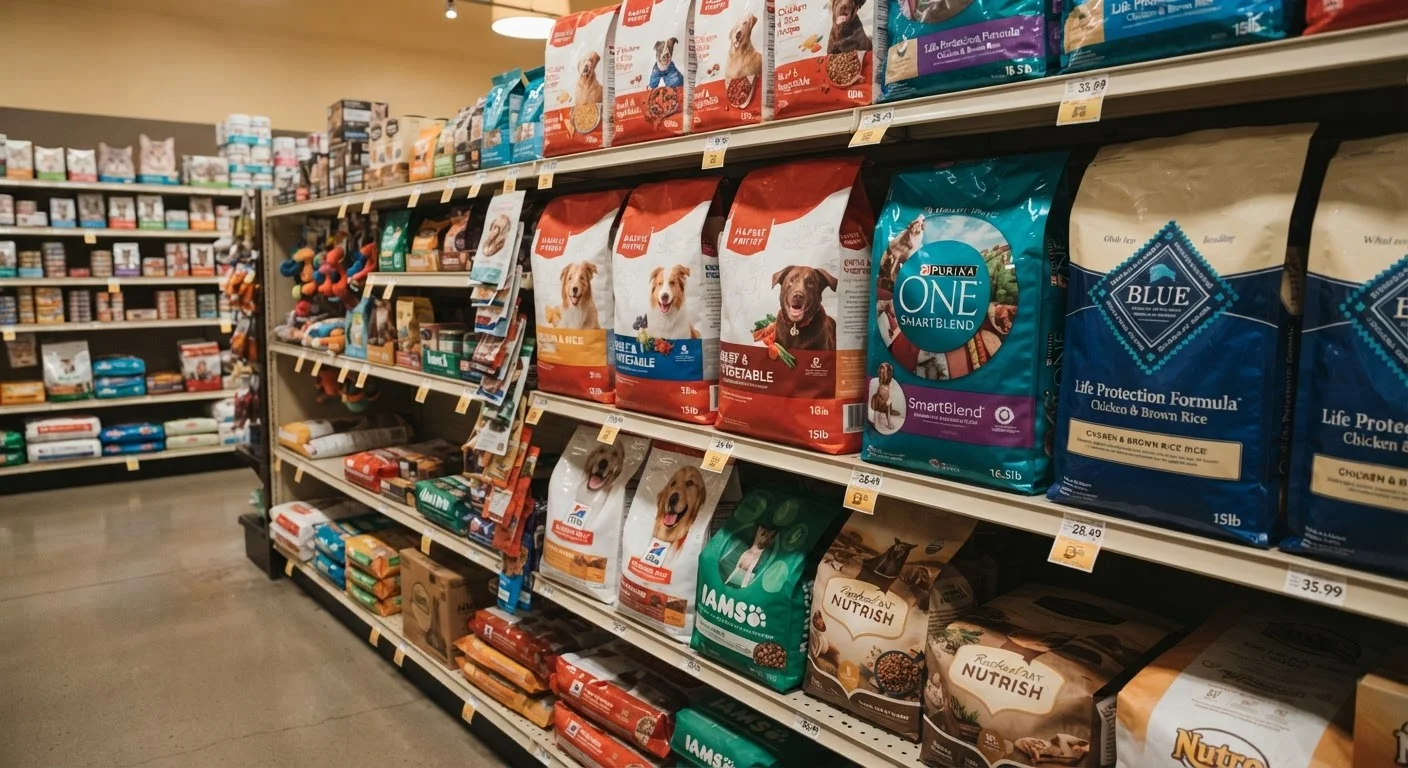
Store brands typically carry a lower sticker price, and in many cases they deliver a lower cost per serving. However, if a store-brand formula requires a larger feeding amount to meet caloric needs, the per-day cost can narrow or close. Run the math on both before assuming one tier is cheaper.
Families managing both dry and wet food budgets can find format-level cost comparisons in a side-by-side look at kibble and wet food costs.
When veterinary input changes the calculation
For healthy adult pets with no diagnosed conditions, the label-based comparison above is enough to guide a reasonable decision. For pets managing kidney disease, food allergies, diabetes, or other conditions, the brand tier question becomes less relevant than whether a diet meets a veterinarian's specific recommendations. Some therapeutic diets are only available through name-brand lines with clinical research behind them, and no store-brand equivalent exists.
This article is general educational information and is not veterinary advice. Families with pets that have health conditions should consult a licensed veterinarian before changing food, regardless of the price difference involved.