
The ingredient list: what it tells you and what it does not
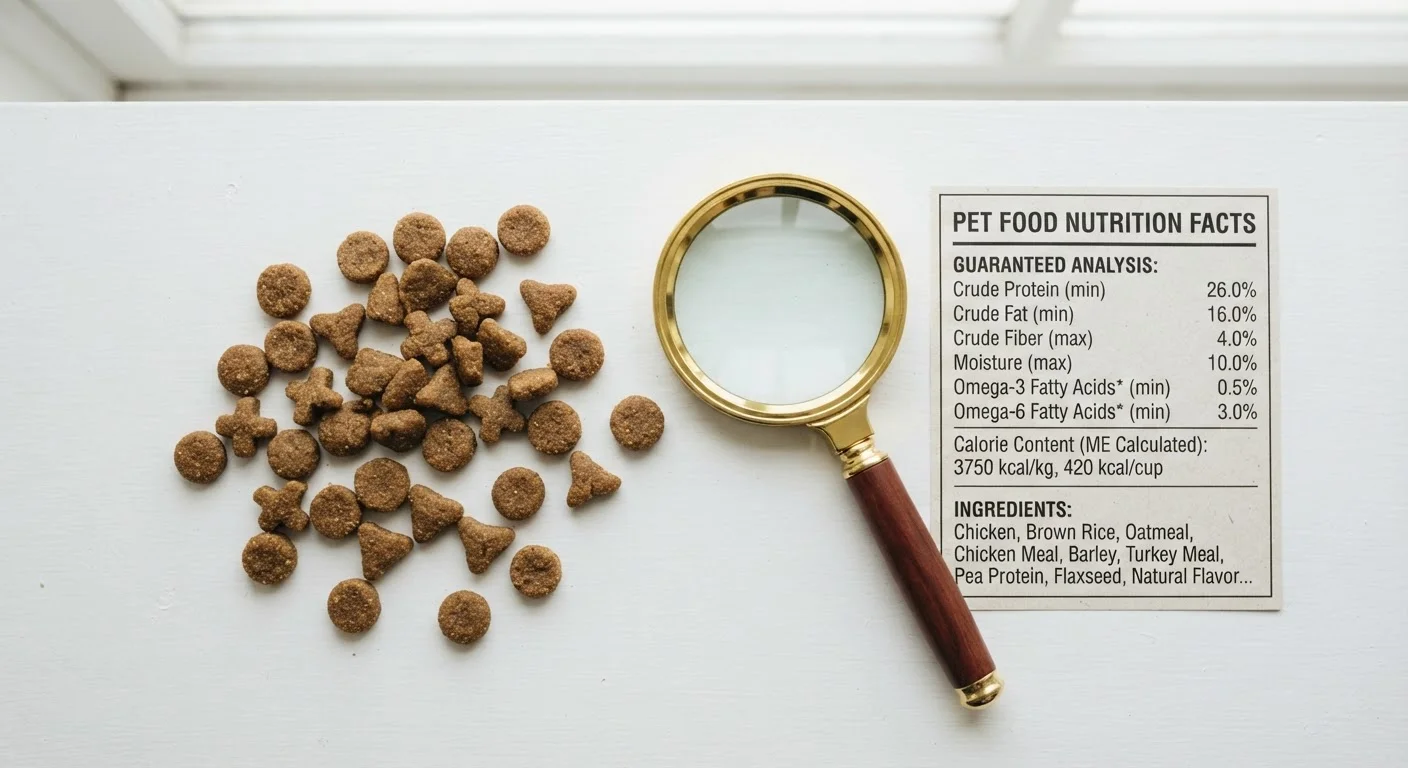
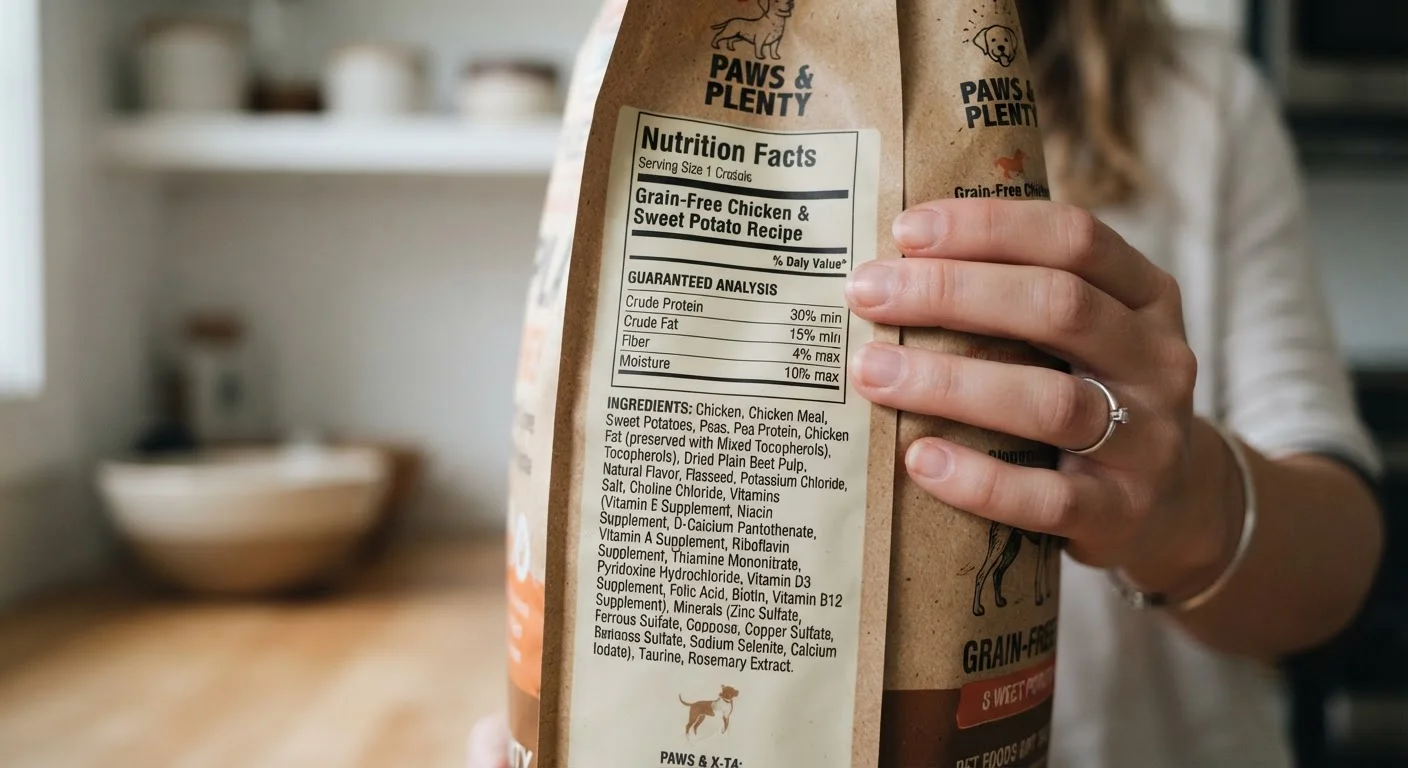
Ingredients appear in descending order by weight as they arrive at the plant, before cooking or processing. This matters because raw meat contains 60 to 75 percent water. A raw chicken listed first may contribute less protein after cooking than a dry ingredient like chicken meal listed fourth.
Chicken meal is simply chicken with most of the moisture removed. It is a concentrated protein source, not an inferior one. When you see it near the top of the list, that signals meaningful protein contribution.
Splitting is a practice where a manufacturer lists the same ingredient under multiple names to push it lower on the list. Corn, for example, might appear as ground corn, corn gluten meal, and corn bran. Each entry looks minor individually, but combined they may outweigh the first-listed protein. Looking for repeated variations of the same base ingredient helps you see this pattern.
For a closer look at which specific ingredients carry nutritional weight versus those that are mostly filler, see a plain-language ingredient reference covering terms families commonly encounter.
Check for ingredient splitting before buying
Scan the ingredient list for the same base ingredient appearing under two or three different names, such as 'wheat flour,' 'wheat gluten,' and 'wheat bran.' Added together, those fractions can outweigh the protein source listed above them. A quick scan takes under a minute and can change your read of the formula entirely.
Guaranteed analysis: reading percentages correctly
The guaranteed analysis panel shows four values at minimum: crude protein (minimum), crude fat (minimum), crude fiber (maximum), and moisture (maximum). These are legal guarantees, not precise measurements. Actual protein content could be higher than the stated minimum.
Comparing a wet food to a dry food using the label percentages as printed produces a misleading result because wet food contains 75 to 82 percent water. To compare them fairly, use the dry matter basis calculation. Divide the nutrient percentage by (100 minus the moisture percentage), then multiply by 100. A wet food showing 10 percent protein with 78 percent moisture actually contains about 45 percent protein on a dry matter basis, which is comparable to many dry foods.
78%
Typical moisture content in canned pet food
AAFCO moisture standards permit canned products to contain up to 78 percent water, which is why dry matter conversion is needed for fair nutrient comparisons.
10%
Maximum moisture in dry kibble
Most dry dog and cat foods contain no more than 10 percent moisture, per standard AAFCO moisture labeling rules for dry products.
Crude fiber is listed as a maximum, meaning the food contains no more than that amount. Fiber numbers on labels are often low because the measurement method does not capture certain fermentable fibers. If your pet has specific digestive needs, the label fiber figure alone is limited as a guide.
The AAFCO nutritional adequacy statement
This statement is the single most useful line on the label for determining whether a food is suitable as a complete diet. It appears in a form similar to: " is formulated to meet the nutritional levels established by the AAFCO Dog Food Nutrient Profiles for adult maintenance."
Two methods can back this statement. Formulation means the recipe was calculated to meet AAFCO nutrient profiles. Feeding trial means the product was actually fed to animals and tested against AAFCO protocols. Feeding trial language reads: "Animal feeding tests using AAFCO procedures substantiate that provides complete and balanced nutrition." The feeding trial method provides stronger real-world evidence of nutritional performance.
Life stage matters too. A food labeled for "all life stages" meets the requirements for the most demanding stage, which is growth and reproduction. That is not necessarily a problem for adult dogs or cats, but it may mean slightly higher protein and fat than an adult-maintenance formula provides.
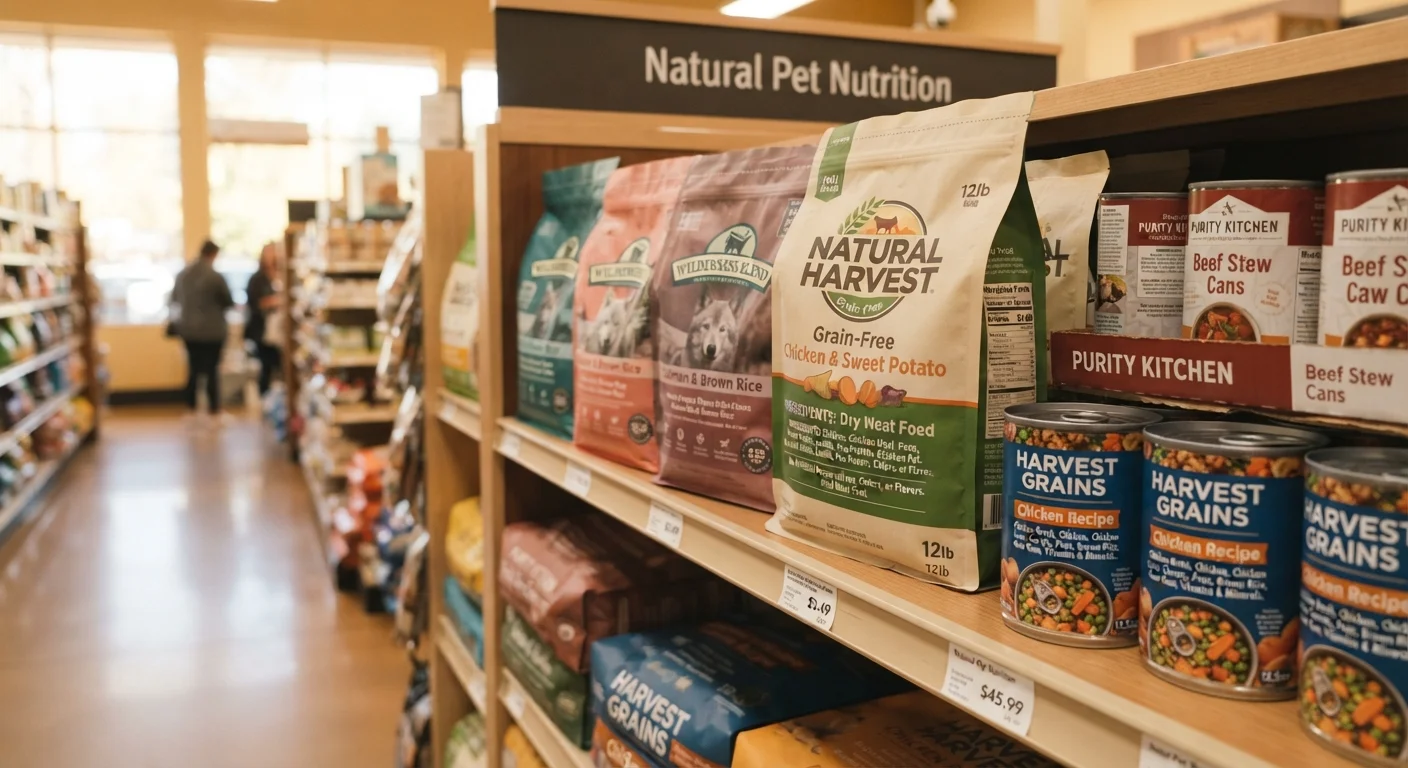
A closer look at AAFCO standards explains how affordably priced foods can and do meet the same adequacy requirements as premium lines.
Putting it together when comparing two products
Once you can read the ingredient list for protein placement and ingredient splitting, convert the guaranteed analysis to dry matter basis, and confirm the AAFCO statement covers the right life stage, you have the tools to compare any two products on nutrition rather than packaging.
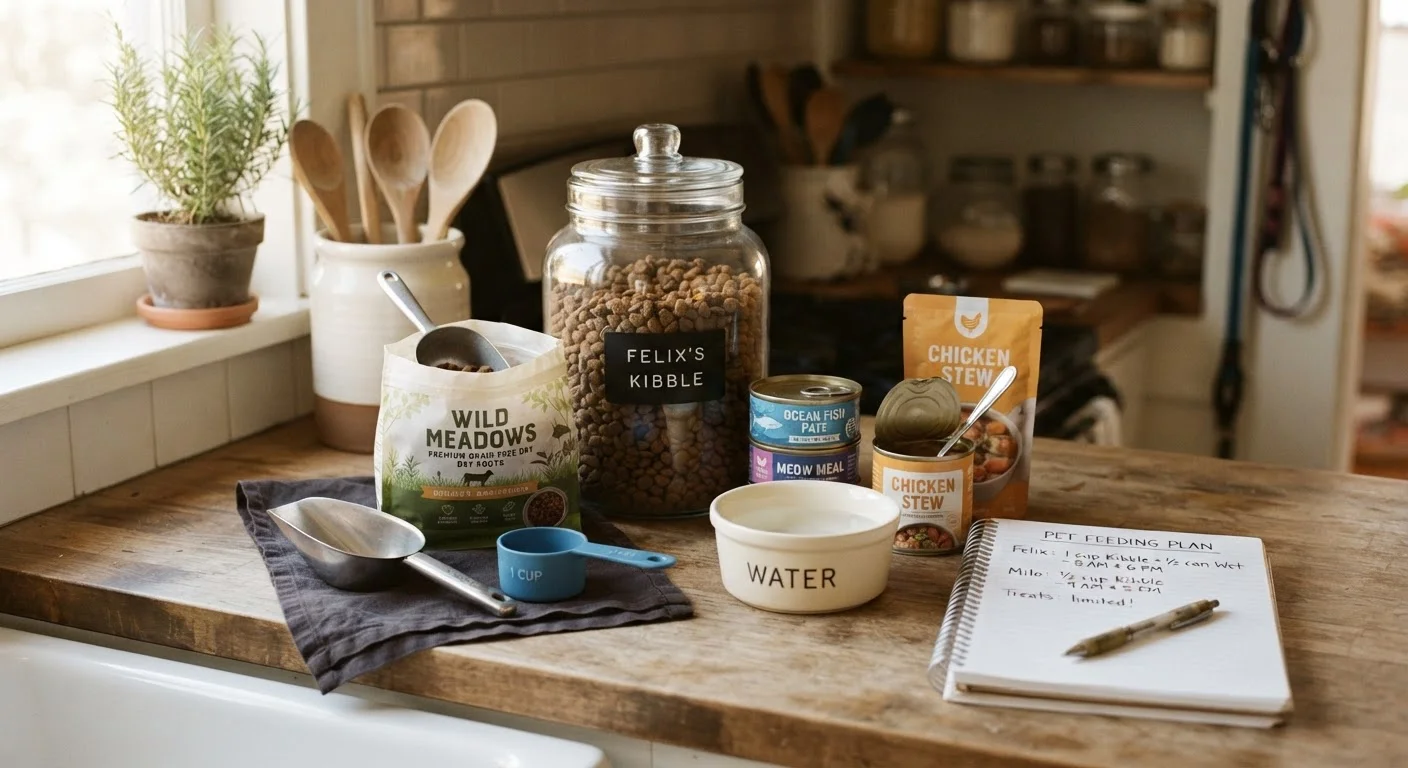
The next variable is cost per serving, not cost per bag. A denser dry food with higher protein content may call for a smaller serving size, which changes the daily cost considerably. Feeding directions on the label give you a starting point, though individual pets vary.
Practical strategies for reducing monthly pet food spending build directly on label literacy, because knowing what a food actually contains is what makes genuine cost comparison possible. For a structured way to track this over time, a monthly feeding audit checklist covers nutrition, portions, and budget in one review.