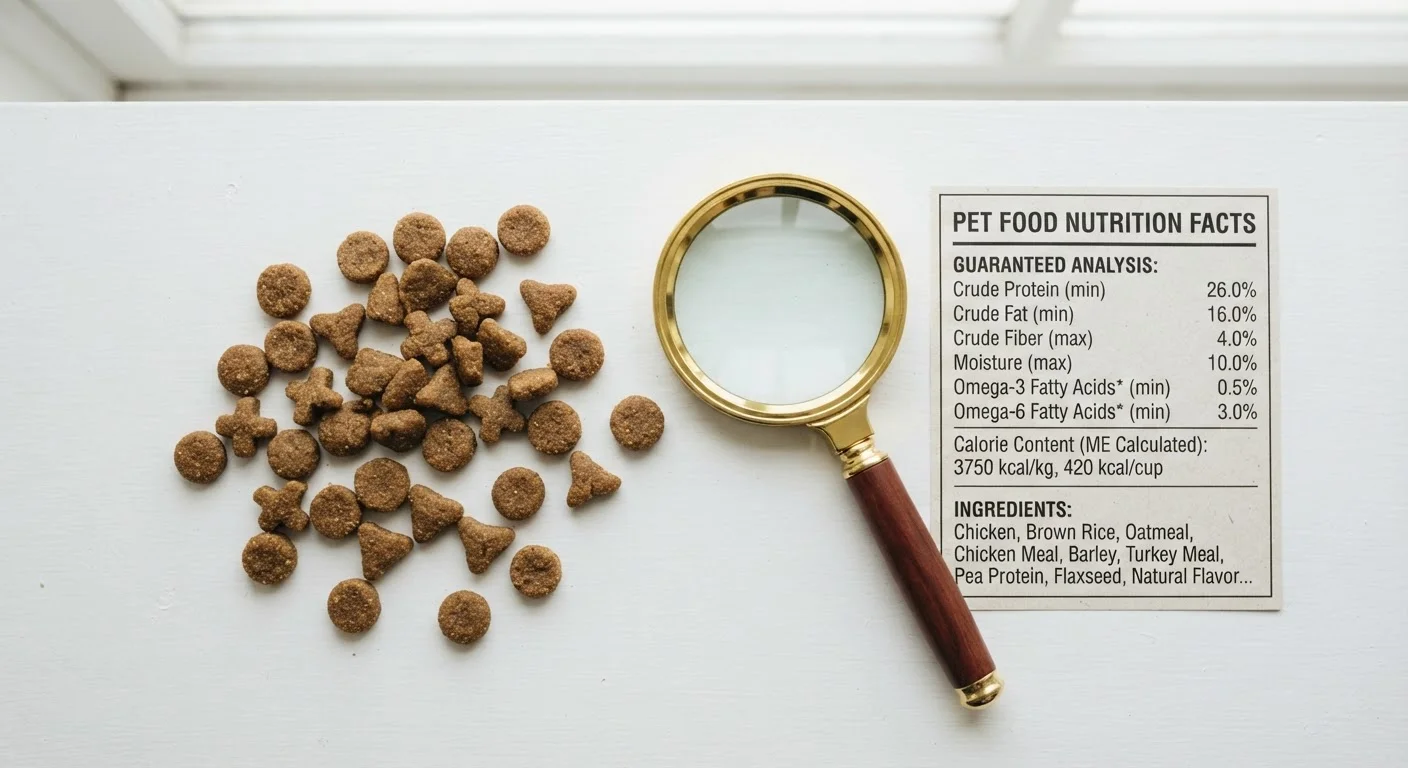


What homemade pet food actually means
Homemade pet food covers a wide range of practices: some owners cook full meals daily, others prepare large batches to freeze, and some mix cooked ingredients into a commercial base. Each approach carries different levels of nutritional risk and time commitment. The term does not describe a single method, so the trade-offs vary significantly depending on how it is done.
The core appeal is understandable. Families can see every ingredient, avoid additives they distrust, and feel they are doing something personal for an animal they care about. Those motivations are legitimate. The question is whether the execution delivers what the pet actually needs. Dogs and cats have specific daily requirements for proteins, fats, minerals, and vitamins that differ from human nutritional needs, and those requirements are harder to meet consistently at home than most guides suggest.
For a broader look at how home cooking compares to commercial formats on cost and nutrition, see how dry kibble and wet food compare for your pet's health and budget.
The real advantages
Full visibility into every ingredient used
Owners select each component, which removes uncertainty about protein sources, fillers, or preservatives they want to avoid.
Useful for pets with confirmed food allergies
A veterinarian-prescribed homemade recipe can eliminate specific trigger ingredients that appear across most commercial options.
Higher palatability for finicky or ill pets
Cooked whole foods are often accepted by pets that reject commercial textures, which matters most when an animal has stopped eating.
Flexible for special health conditions
Under veterinary guidance, recipes can be adjusted for conditions such as kidney disease or pancreatitis that require strict macronutrient limits.
Ingredient control is the most concrete benefit. Owners who choose homemade diets know exactly what protein source is used, whether grains are present, and what preservatives are or are not included. For pets with confirmed food allergies or intolerances, a veterinarian-prescribed homemade recipe can be the most reliable way to eliminate a specific trigger ingredient that appears across most commercial options.
Palatability is another practical point. Pets that refuse commercial food due to texture or smell will often eat cooked whole foods readily. For a senior or ill animal that has stopped eating, this can matter more than any cost calculation.
The genuine risks
Most recipes are nutritionally incomplete
A 2019 analysis in the Journal of Nutritional Science found the majority of widely available home-cooked dog food recipes deficient in multiple nutrients, most often calcium, zinc, vitamin D, and choline.
Cats face specific deficiency risks
Cats require taurine and arachidonic acid from animal tissue; deficiencies in these nutrients can cause serious cardiac and vision problems that develop slowly and may not be obvious until significant harm has occurred.
True cost often exceeds commercial alternatives
When veterinary-grade supplements are included to fill micronutrient gaps, the daily cost per serving frequently matches or surpasses a mid-range AAFCO-compliant commercial food.
Requires consistent preparation to stay balanced
Casual ingredient swaps or proportion changes can shift the nutritional profile significantly, creating gaps that accumulate over weeks or months.
Professional formulation adds an upfront cost
A consultation with a board-certified veterinary nutritionist is an additional expense that many families do not factor into their initial cost estimate.
The most consistent finding across veterinary nutrition literature is that homemade diets, when prepared without professional guidance, are nutritionally incomplete. A 2019 analysis published in the Journal of Nutritional Science examined 200 home-cooked dog food recipes available online and in books; the majority were deficient in multiple essential nutrients, most often calcium, zinc, vitamin D, and choline. Cats face additional risk because they require taurine and arachidonic acid from animal sources, and deficiencies in these can cause cardiac and vision problems.
Cost is frequently misunderstood. Feeding a 50-pound dog a nutritionally adequate homemade diet, including the veterinary-grade supplements needed to fill micronutrient gaps, often costs more per day than a mid-range AAFCO-compliant commercial food. The cost comparison only favors home cooking when supplements are skipped, which is exactly when nutritional deficits appear.
Time and consistency are operational risks. A recipe that works well when prepared carefully can become unbalanced if ingredient proportions shift, protein sources are swapped casually, or cooking methods change significantly.
For families looking at the broader picture of pet food spending, strategies for stretching your pet food budget without cutting nutritional corners may offer more practical options.
What the research says about nutrient gaps
95%+
Home-cooked recipes with at least one nutrient deficiency
A 2019 analysis in the Journal of Nutritional Science reviewed 200 home-cooked dog food recipes and found the vast majority deficient in one or more essential nutrients.
4
Most commonly deficient nutrients in home-cooked dog diets
Calcium, zinc, vitamin D, and choline appeared as the most frequent gaps across the recipes analyzed in that study.
2x
Estimated daily cost increase with proper supplementation
Veterinary nutritionists note that adding required supplements to a homemade diet can roughly double the ingredient cost compared to unsupplemented home cooking.
Calcium deficiency is the most commonly documented problem in home-cooked diets for dogs. Bone is the primary natural source, and cooked recipes that use boneless meat without a calcium supplement consistently fall short of the Association of American Feed Control Officials (AAFCO) minimum. Over months, this produces skeletal problems, particularly in growing animals.
Cats present a separate set of concerns. Because cats are obligate carnivores, they cannot synthesize certain nutrients that dogs and humans produce internally. Taurine, vitamin A as retinol, and niacin must come from animal tissue, and boiling or slow-cooking can reduce the bioavailability of some of these compounds.
AAFCO nutrient profiles exist precisely to codify these minimum requirements. Commercial foods that carry an AAFCO nutritional adequacy statement have been formulated or feeding-trial tested to meet those thresholds. Replicating this at home without a veterinary nutritionist reviewing the recipe is difficult for most families. To understand what those label terms mean in practice, ingredients that signal nutritional quality in affordable pet food covers the key markers worth knowing.
How to reduce the risk if you proceed
Getting a recipe professionally formulated
Board-certified veterinary nutritionists (Diplomates of the American College of Veterinary Nutrition) can create recipes tailored to a specific pet's weight, life stage, and health status. Some veterinary schools and telemedicine platforms offer nutritional consultations at lower costs than specialist clinic visits. A one-time formulation cost is generally more affordable than addressing a nutrition-related health condition later.
The single most important step is working with a board-certified veterinary nutritionist (a Diplomate of the American College of Veterinary Nutrition) rather than relying on general recipes from books or websites. A formulated recipe will specify exact ingredient weights, required supplements, and any substitutions that are and are not acceptable.
Supplements are not optional in most homemade diets. A balanced calcium source, often calcium carbonate at a veterinarian-calculated dose, and a complete vitamin-mineral mix are standard additions. Using a supplement formulated specifically for homemade pet diets is more reliable than assembling individual human supplements, which may contain additives harmful to animals.
Periodic bloodwork gives an objective measure of whether the diet is working. A veterinarian can check for early signs of deficiency before clinical symptoms appear, which is worth scheduling at least annually for any pet on a homemade regimen.
Families who want to lower pet food costs without the complexity of full home cooking may find more practical value in understanding what affordable commercial pet food actually delivers nutritionally.
This article is for general informational purposes only and is not veterinary or medical advice. Consult a licensed veterinarian or board-certified veterinary nutritionist before making significant changes to your pet's diet.