
What the ingredient list actually tells you
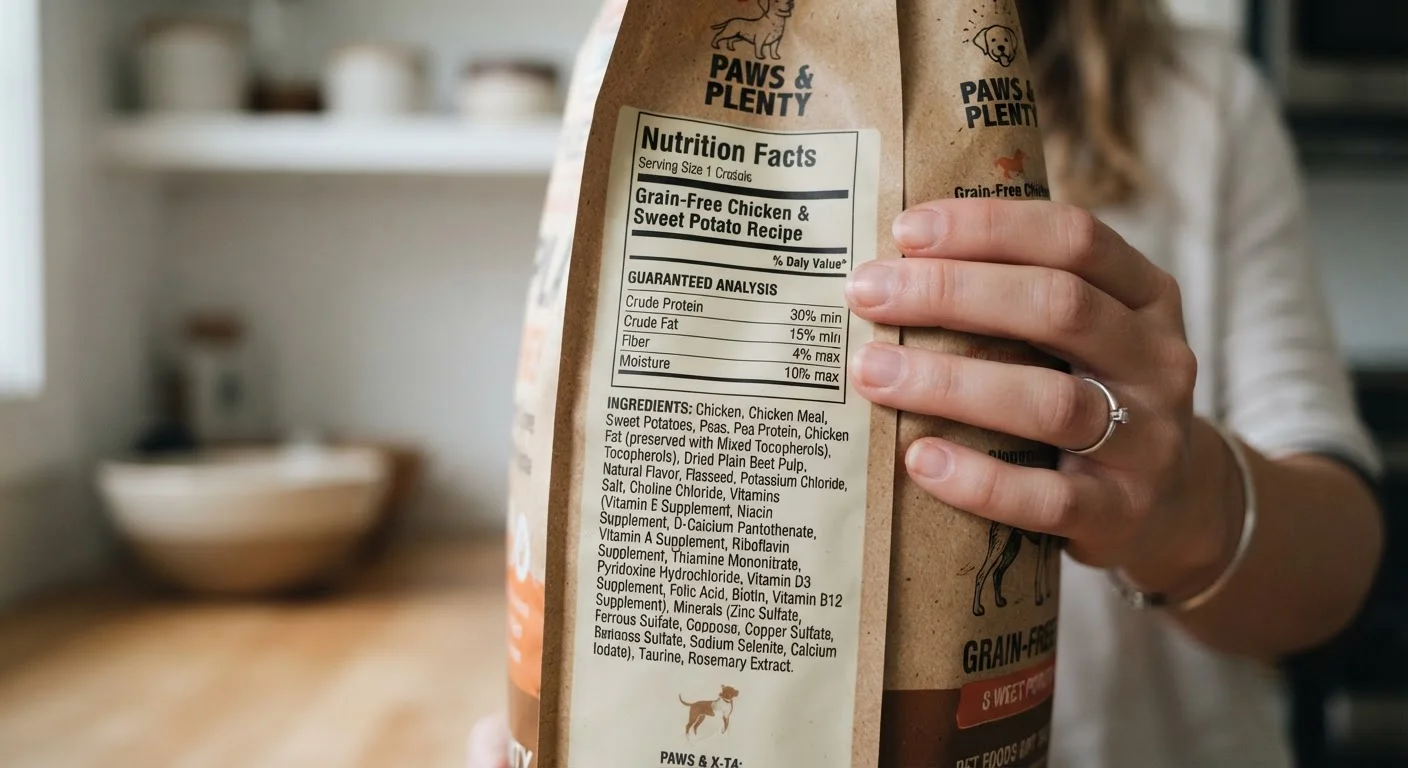
Pet food ingredients are listed by weight before processing, heaviest first. That means the first five or six items carry the most weight in the formula. When a named protein source, such as chicken, beef, or salmon, appears in the first position, that is a signal the food is built around animal protein rather than filler. When a grain or starch leads the list, protein may be present but at a lower proportion.
Whole grains and legumes, including brown rice, oatmeal, peas, and lentils, can supply digestible carbohydrates and some fiber at low cost. These are not nutritional failures. Problems arise when multiple starch sources appear back to back in the first few slots, pushing named protein further down the list. Splitting one ingredient into several similar entries, for example listing corn, corn gluten meal, and corn starch separately, is a practice sometimes called ingredient splitting, and it can make the protein appear higher than it functionally is.
For a deeper look at how to read every section of a label, see how to read a pet food label.
AAFCO
The Association of American Feed Control Officials. This organization sets the nutritional standards that pet food manufacturers use to formulate and label complete and balanced products in the United States.
Ingredient splitting
A labeling practice where one ingredient is divided into multiple similar entries to push other ingredients higher on the list. For example, listing corn flour, corn gluten, and corn starch separately instead of as a single corn entry.
Meat meal
A rendered, dried protein concentrate made from animal tissue. Because moisture is removed, meat meal contains more protein by weight than fresh meat listed by the same name.
By-product
Clean animal parts other than skeletal muscle, such as organs, that are included in pet food. AAFCO defines acceptable by-products; they can supply real nutritional value including vitamins and minerals.
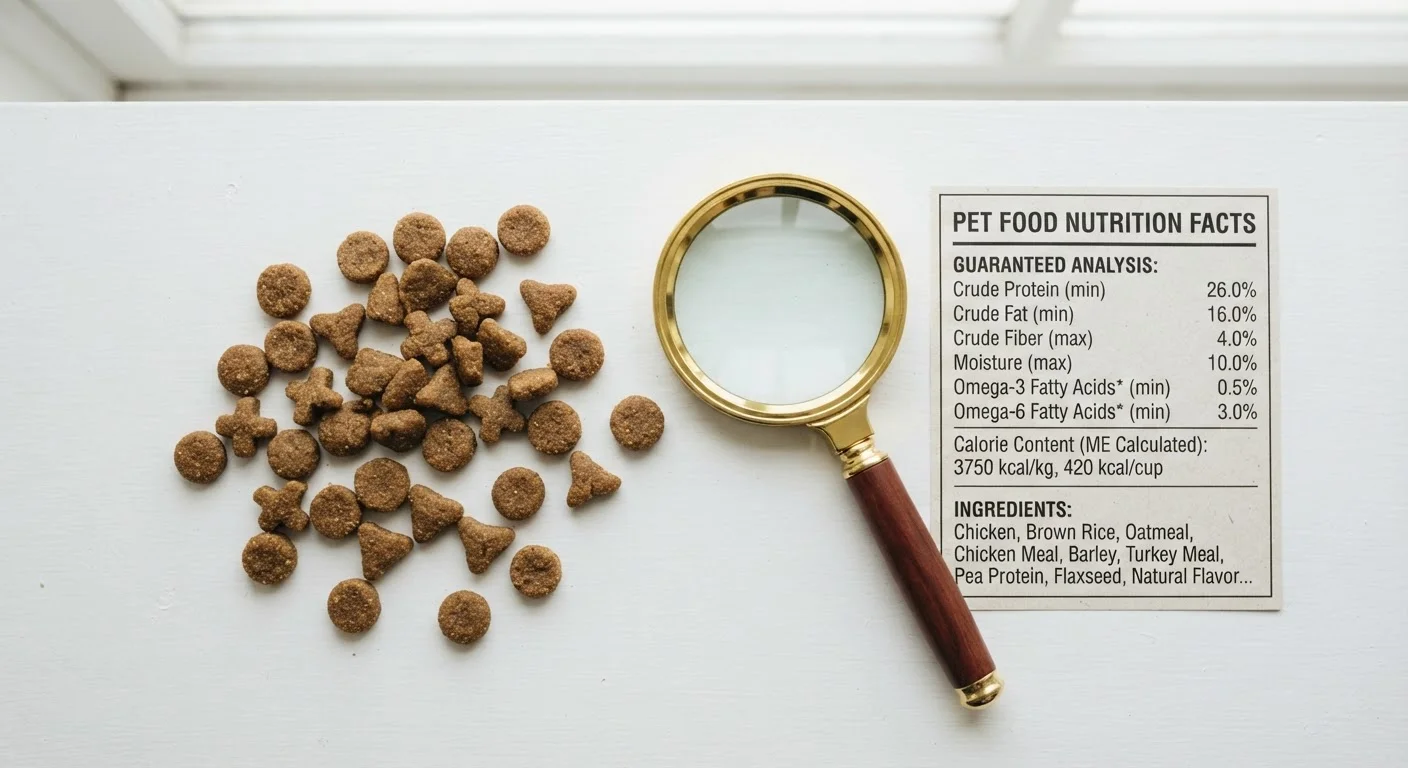
Guaranteed analysis
The section of a pet food label that lists minimum and maximum percentages of crude protein, crude fat, crude fiber, and moisture. It provides a baseline nutrient comparison across products.
Nutritional adequacy statement
A required label statement indicating whether a food is complete and balanced, which life stage it supports, and whether that determination was made by formulation or feeding trial.
Mixed tocopherols
A natural preservative derived from vitamin E, used in many pet foods as an alternative to synthetic preservatives such as BHA or BHT.
Feeding trial
A method of verifying pet food adequacy in which animals consume the food over a set period and are assessed against AAFCO health benchmarks, as opposed to calculation-only formulation.
Ingredients worth seeing and ingredients worth questioning
Named meat meals, such as chicken meal or turkey meal, are concentrated protein sources. Because water has been removed, they often deliver more protein by weight than fresh meat listed ahead of them. This is a case where the ingredient sounds less appealing but is nutritionally sound.
Animal by-products are another frequently misunderstood entry. The Association of American Feed Control Officials (AAFCO) defines meat by-products as clean parts other than rendered flesh, which can include organs. Organs supply real nutrients including vitamins and minerals. The word by-product alone does not indicate low quality.
Artificial preservatives such as BHA, BHT, and ethoxyquin are worth noting. Research into their safety in pet food is ongoing, and some families prefer to avoid them. Natural alternatives, including mixed tocopherols (vitamin E) and rosemary extract, appear in many affordable formulas. Synthetic colors such as Red 40 or Yellow 5 serve no nutritional purpose in pet food and are present for the buyer's eye, not the animal's benefit.
Generic fat sources labeled only as "animal fat" without specifying the species are less transparent than sources listed as "chicken fat" or "salmon oil." Transparency in sourcing generally indicates a more accountable manufacturer.
Affordable does not mean nutritionally inferior when the ingredient list holds up to this kind of scrutiny.
AAFCO statements and what they confirm
An AAFCO nutritional adequacy statement tells you two things: the life stage the food is formulated for (adult maintenance, growth and reproduction, or all life stages) and the method used to verify adequacy. The two methods are formulation against AAFCO nutrient profiles, and feeding trials.
A formulation statement means the recipe was calculated to meet nutrient minimums on paper. A feeding trial statement means animals ate the food under controlled conditions and met specific health benchmarks. Neither method is worthless. For a family on a budget, seeing any complete AAFCO statement is a meaningful floor: the food was not simply packaged without nutritional review.
Foods labeled "for supplemental or intermittent feeding" are not complete and balanced and should not be a pet's primary diet. This appears on treats, toppers, and some specialty items, so reading that line carefully matters.
For practical strategies on stretching your pet food spending while staying within complete-and-balanced options, see stretching your pet food budget.
Quick reference: signals to look for and signals to watch
The table below summarizes the main ingredient signals covered in this article. Use it as a checklist when comparing labels at the store.
| Named protein in first position | Positive signal (AAFCO ingredient listing rules) |
| Named meat meal (e.g., chicken meal) | Positive signal, concentrated protein (AAFCO definitions) |
| Generic 'animal fat' without species | Lower transparency (AAFCO labeling standards) |
| Multiple starch entries in top slots | Watch for ingredient splitting (AAFCO labeling standards) |
| BHA, BHT, ethoxyquin | Synthetic preservatives, research ongoing (FDA and AAFCO monitoring) |
| Mixed tocopherols or rosemary extract | Natural preservative alternatives (Common industry practice) |
| AAFCO adequacy statement present | Minimum nutritional floor confirmed (AAFCO model regulations) |
| Feeding trial vs. formulation | Both valid; trial involves live animal testing (AAFCO feeding protocols) |
| 'Supplemental or intermittent feeding' label | Not a complete diet, do not use as primary food (AAFCO model regulations) |
| Synthetic colors (Red 40, Yellow 5) | No nutritional purpose in pet food (FDA color additive regulations) |
Families considering homemade food should review the nutritional trade-offs of homemade pet food before switching, since a home-prepared diet carries its own formulation risks. If you are new to navigating pet food costs overall, a family starting point for budget feeding covers the basics in one place.
This article is general educational information about pet food labels and ingredients. It is not veterinary advice. Consult a licensed veterinarian for guidance specific to your pet's health, age, or medical conditions.