
What you need before you start
Before changing anything your pet eats, gather the information below. Switching food without a baseline can lead to digestive upset and wasted product, which costs more, not less.
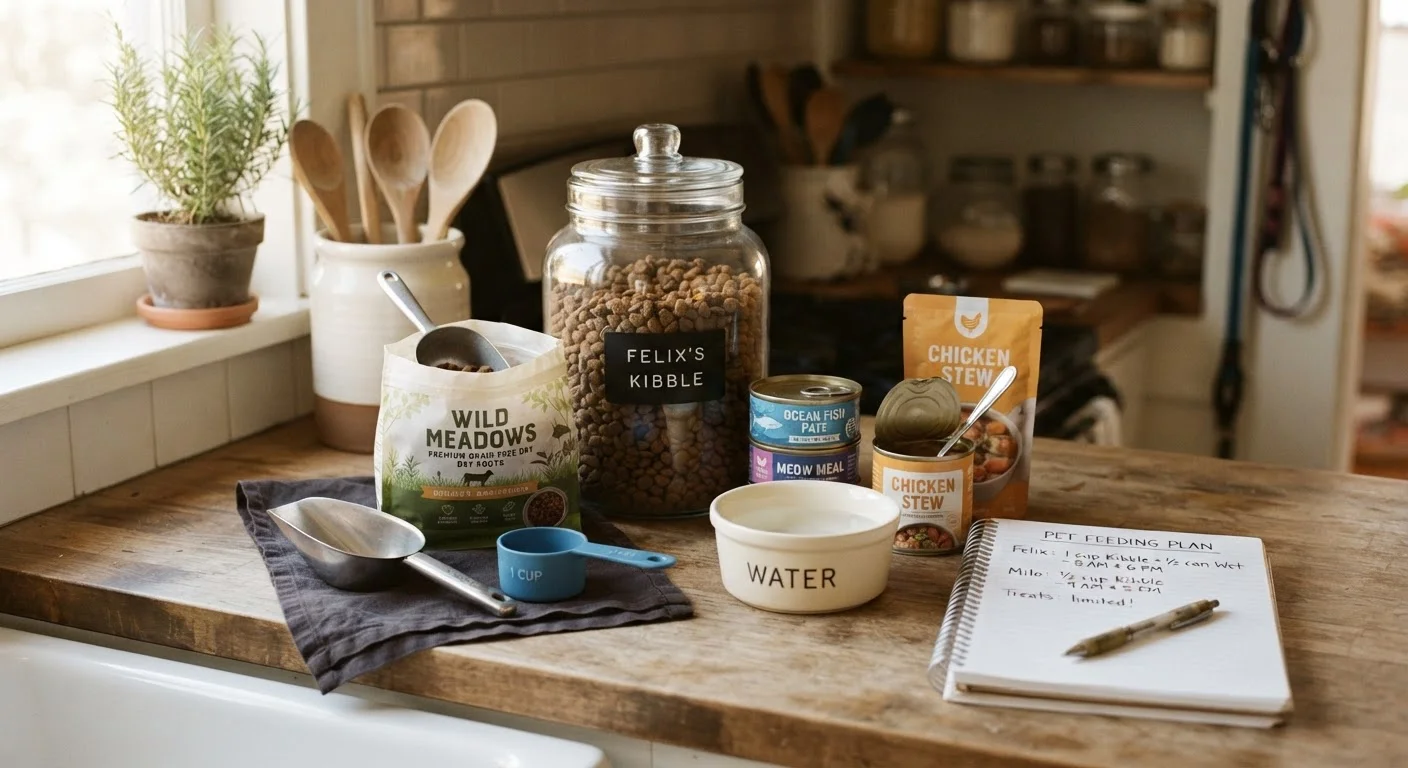
What you will need
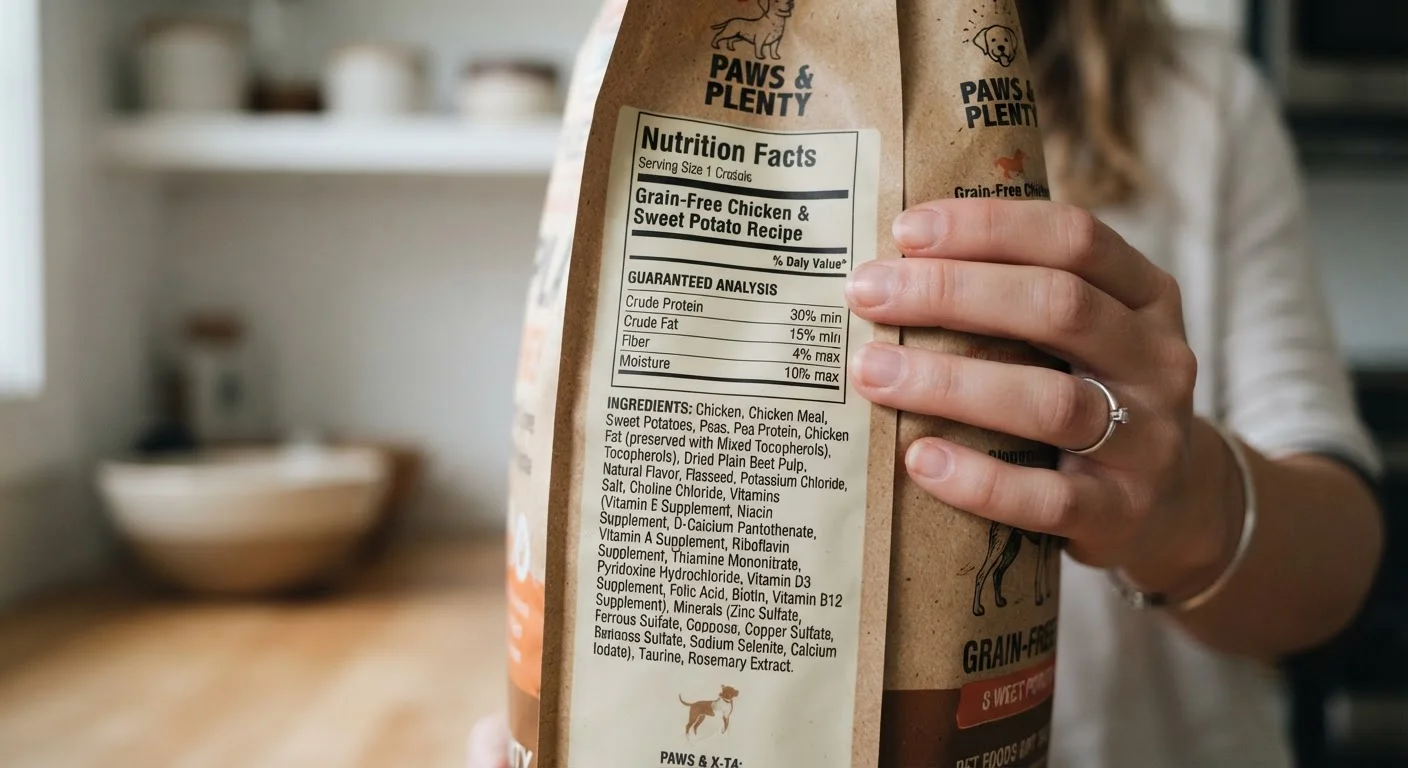
If you are new to reading pet food labels, the label-reading guide covers ingredient lists, guaranteed analysis panels, and AAFCO statements in plain language before you start comparing options.
Step-by-step: cutting costs without cutting nutrition
Follow these steps in order. Each one builds on the last, so skipping ahead can produce incomplete results. The goal is a sustainable monthly spending reduction, not a one-time swap that harms your pet's health.
Calculate your real cost per ounce
Divide the price of your current food by the total ounces in the bag or case. This is your baseline cost per ounce. Do the same calculation for any food you are considering switching to. Sticker price alone is misleading because bag sizes vary widely. A smaller, cheaper bag often costs more per ounce than a larger one at a higher shelf price.
Check the AAFCO statement on every candidate food
The Association of American Feed Control Officials (AAFCO) statement tells you whether a food was formulated to meet a recognized nutrient profile or was tested through a feeding trial. Look for the phrase 'complete and balanced' alongside the life stage the food covers. A food without this statement may be a treat, supplement, or intermittent diet, not a sole source of nutrition. Do not trade a complete food for an incomplete one to save money.
For help interpreting what you see on the label, the ingredients quality guide covers specific terms and red flags.
Verify correct portion size before you buy
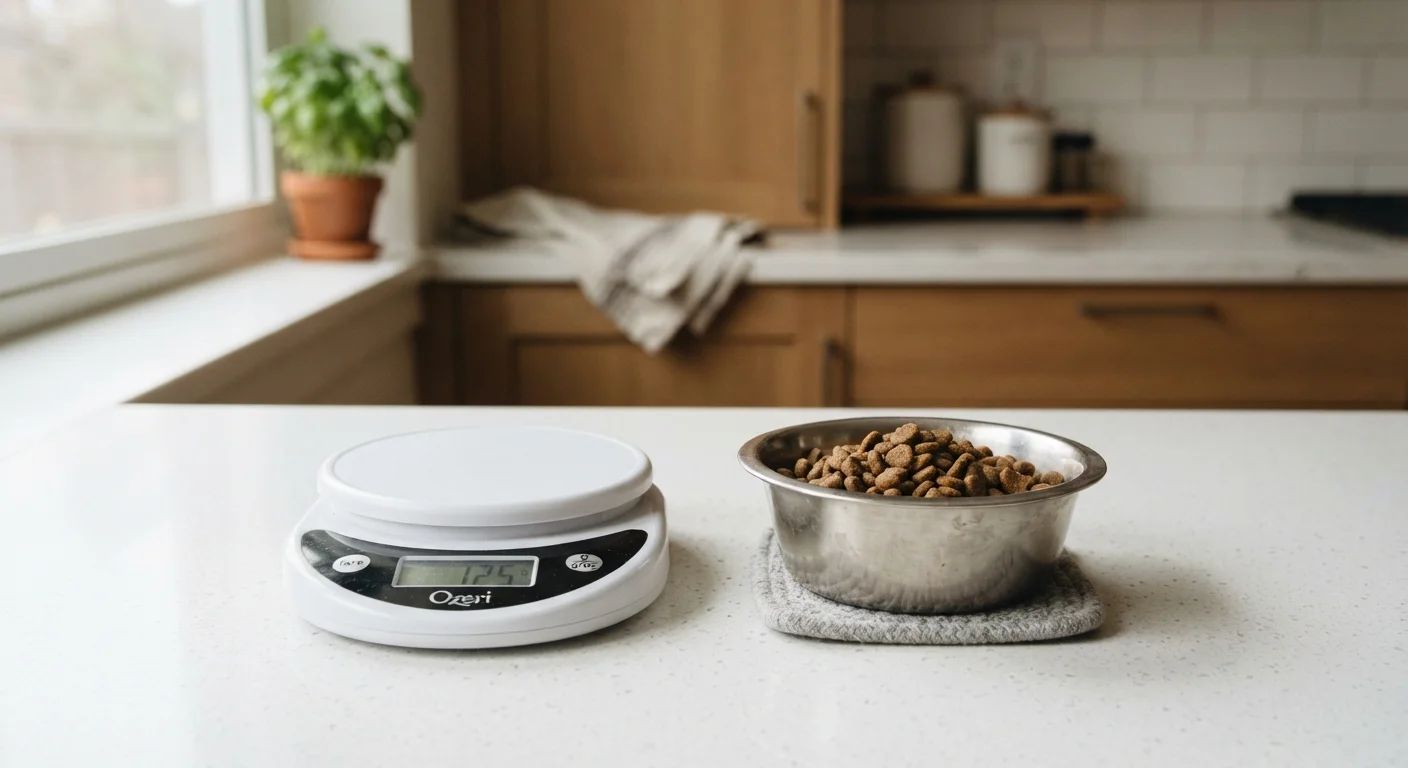
Look up the feeding guidelines for both your current food and any candidate replacement. Caloric density varies between products: a cheaper food with lower caloric density may require larger portions to meet your pet's energy needs, which narrows or eliminates the cost difference. Compare daily feeding amounts in grams or cups alongside the cost-per-ounce figure you calculated in Step 1.
Plan a gradual transition over seven to ten days
Mix the new food with the current food, starting with roughly 25 percent new food and 75 percent current food for the first two to three days. Increase the new food proportion every two to three days until the transition is complete. A gradual shift reduces the risk of digestive upset, which is both uncomfortable for your pet and potentially expensive if it requires veterinary attention.
Evaluate bulk purchasing carefully
Larger package sizes generally have a lower cost per ounce, but only buy in quantities your pet can realistically consume before the food degrades. Check the manufacturer's guidance for shelf life after opening. Store dry kibble in an airtight container in a cool, dry location. Wet food opened but not finished should be refrigerated and used within a few days per the label's instructions.
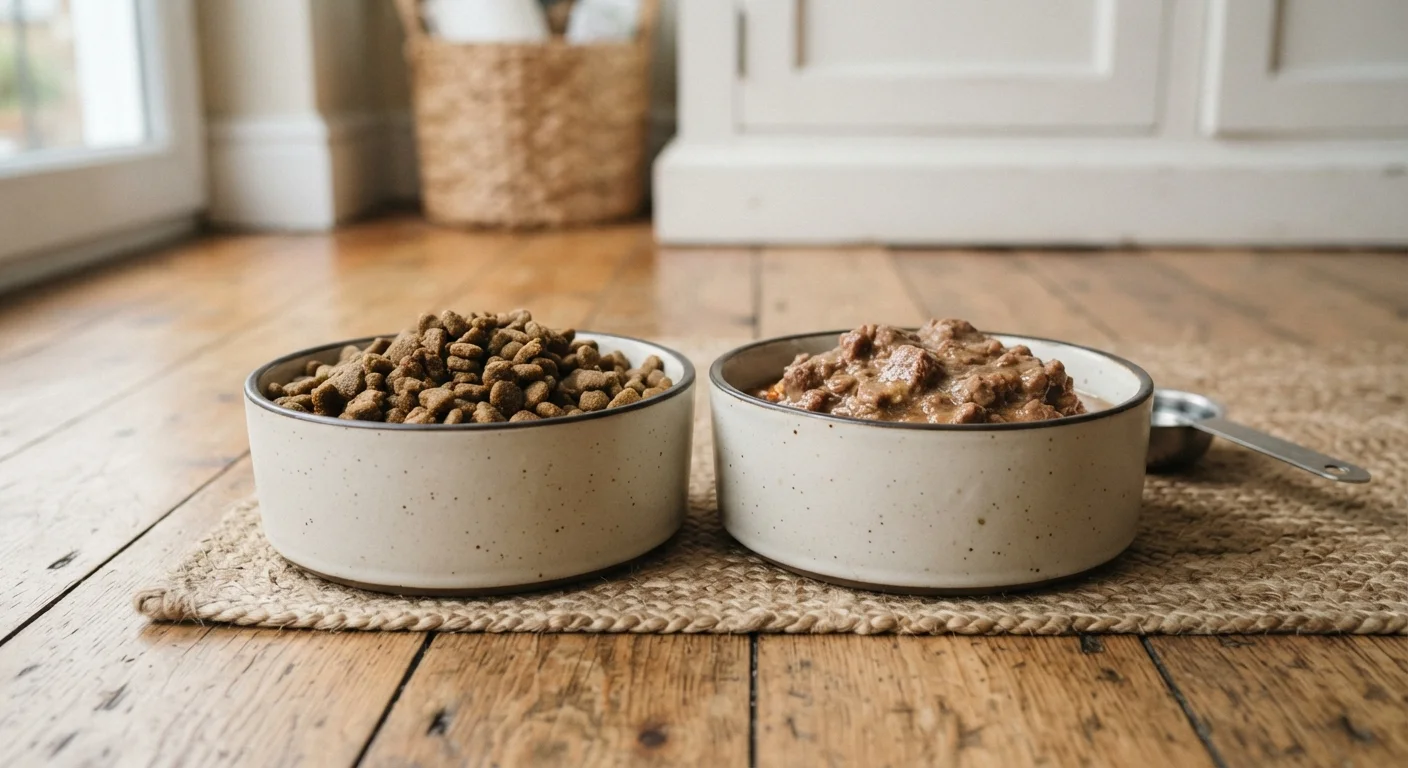
For a broader view of how food format affects both nutrition and cost, see the dry kibble and wet food comparison.
Common pitfalls that erase your savings
Several habits undo the work of careful shopping. Overfeeding is among the most common: feeding more than the label's recommended amount burns through a bag faster than any price calculation accounts for. The guide to portion sizes and feeding schedules walks through how to calibrate amounts by weight and life stage.
Buying in bulk only saves money when the food stays fresh long enough to be eaten. Dry kibble has a finite shelf life after opening, typically four to six weeks once the bag is unsealed, though always check the manufacturer's guidance on the package. A large bag that goes stale or rancid costs more than a smaller one used completely.
Schedule food changes around your routine
Transitions are easier to track when they align with a regular shopping cycle. If you buy food every four weeks, start the transition in the last week of your current supply so you have a natural stopping point. Writing the start date on the new bag takes seconds and prevents guessing about how far along the transition is.
Finally, impulse switching because a new food is cheaper that week often triggers a transition without a gradual introduction, causing digestive problems that may require a veterinary visit. That cost more than offsets any savings.
Keeping your budget on track month to month
A one-time audit is less useful than a regular check-in. Pets' caloric needs shift with age, weight, and activity level, so the correct portion and the right food can change over time. The monthly pet feeding audit checklist gives a structured way to review nutrition, portions, and spending in one sitting.
If you are considering preparing food at home as a further cost measure, review the nutritional trade-offs of homemade pet food first. Home cooking can introduce deficiencies that are not obvious without professional formulation, and the veterinary costs of correcting those deficiencies can exceed the savings.
Families new to managing pet food costs can also start with the family starting point for budget pet feeding, which covers nutrition basics and label reading from the ground up.