

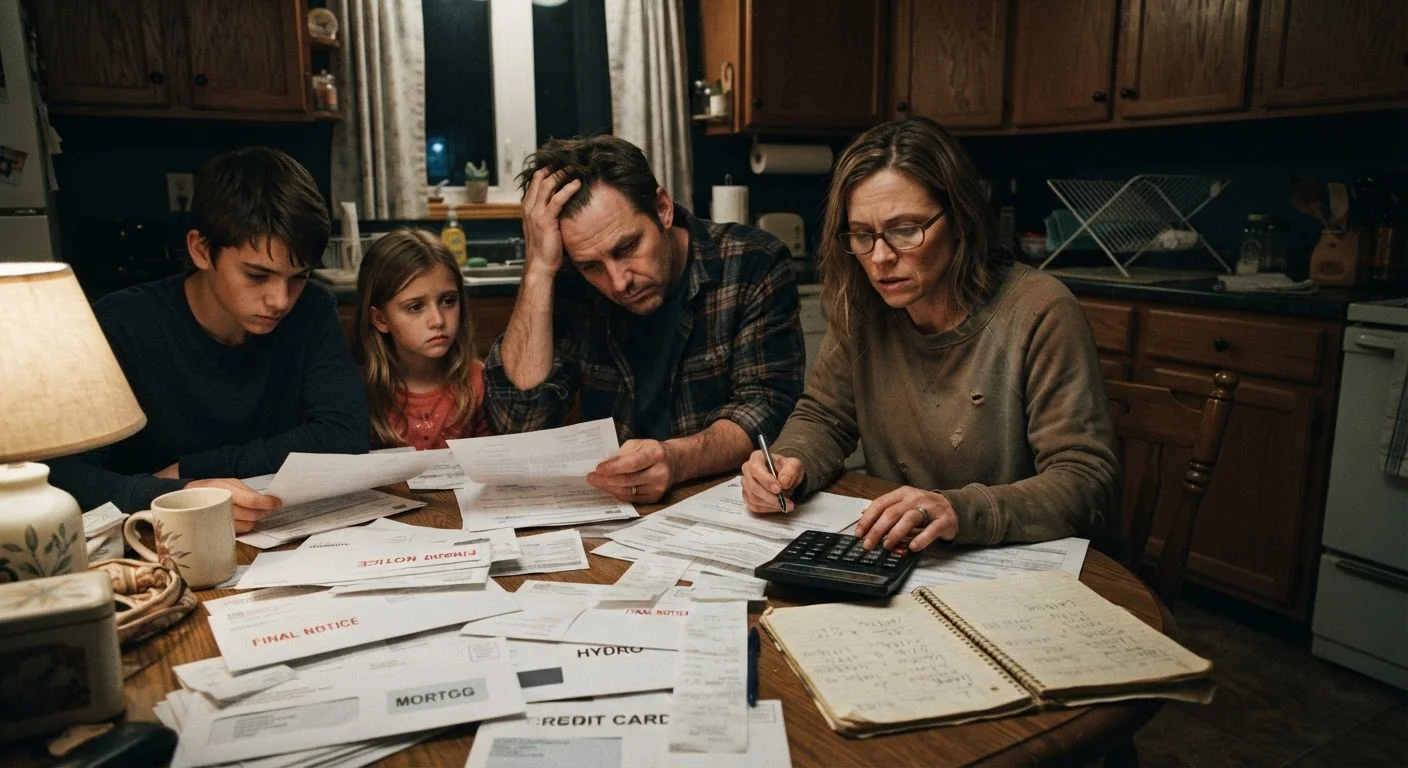
Why effort alone does not pay down debt
Most families who stay in debt are not careless with money. They are working hard, cutting back where they can, and making payments every month. The problem is usually structural, not motivational. Certain financial habits, each one reasonable-sounding on its own, combine to keep balances from falling in any meaningful way.
Understanding those patterns is more useful than general advice to spend less. The specific mistakes below are the ones that appear most often in households that are genuinely trying to get out of debt but not making headway.
Paying only the minimum balance each month instead of as much as possible above it.
Why it happens: Minimum payments feel manageable, and lenders present them as the normal payment amount, which obscures how little principal actually gets paid down.
Having no cash buffer, so every unexpected expense goes back on a credit card.
Why it happens: Families focused entirely on debt payoff often redirect every spare dollar toward balances, leaving nothing available when a car repair or medical bill arrives.
Paying down debt without a written plan that assigns every extra dollar to a specific balance.
Why it happens: Good intentions spread extra money across multiple accounts inconsistently, so no single balance falls fast enough to create momentum.
Taking on new debt while trying to pay off existing debt.
Why it happens: Financing a car, opening a store card for a purchase discount, or borrowing for a home repair can all feel justified in the moment, but each addition resets progress.
Treating the budget as a rough estimate rather than a tracked document.
Why it happens: Most families have a general sense of their income and fixed bills, but variable spending, dining, subscriptions, impulse purchases, tends to run 15 to 30 percent higher than people estimate.
The role of travel and lifestyle spending in debt cycles
Discretionary spending is not always the main driver of family debt, but it is often where small decisions compound quietly. A family road trip financed partly on a credit card, a vacation where resort fees and meal markups add several hundred dollars to the bill, a rental car booked without comparing costs: none of these is catastrophic alone. Together, they slow payoff timelines. Practical planning before spending, rather than after, closes that gap. For families who want to keep traveling while managing debt, low-cost road trip strategies are worth reviewing before the next trip gets planned.
Minimum payments are designed to be slow
Credit card minimum payment formulas are set by lenders, not in the borrower's interest. On a $5,000 balance at 20% APR, paying only the minimum each month can extend repayment past a decade and cost thousands in interest. This is general information, not advice tailored to your situation. A nonprofit credit counselor can help you work through the specifics.
The same logic applies to education costs. Families who borrow for college while carrying existing consumer debt often find both burdens competing for the same limited monthly cash. Separately, falling behind on college savings while managing debt is a compounding problem worth addressing early rather than later.
This article provides general financial information for educational purposes and does not constitute personalized financial, tax, or legal advice. Consult a licensed financial professional for guidance specific to your situation.